
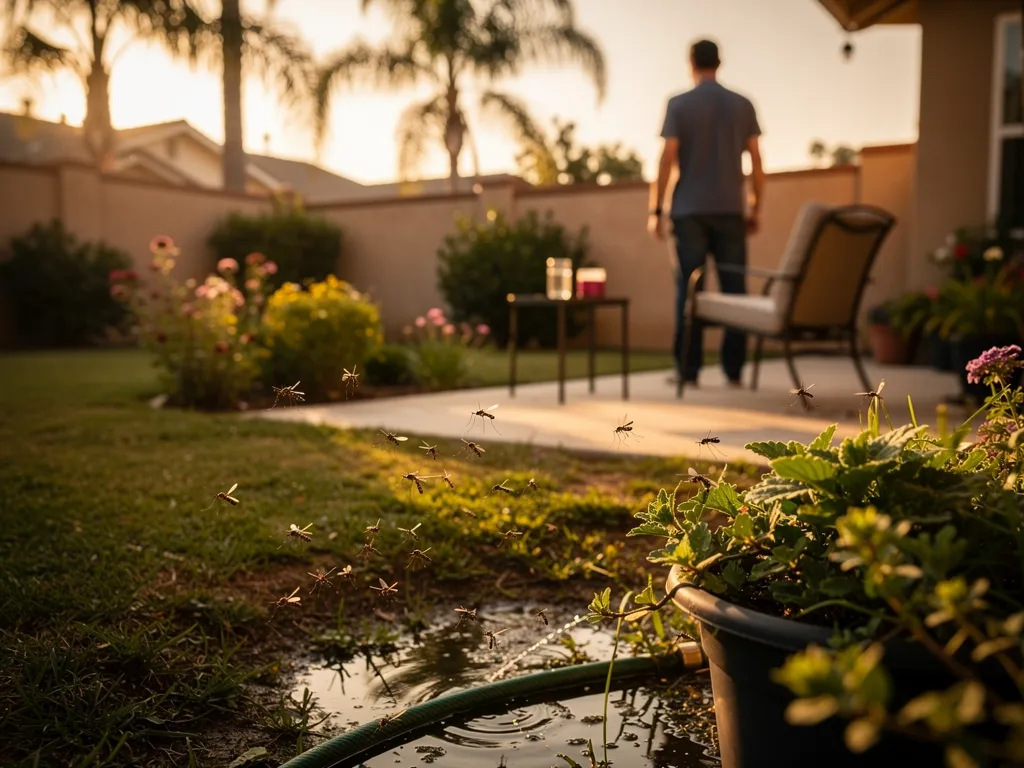
The honest answer is that Los Angeles doesn’t get much of a mosquito off-season. Our climate is mild enough that mosquitoes can stay active for much of the year, but the biting really ramps up in the warm months, roughly late spring through fall, with the worst of it in summer and early fall.
Here’s how the season actually plays out, and why “season” here has more to do with your yard than the calendar.
The Short Answer: Late Spring Through Fall
If you want peak biting months, look at May through October. As temperatures climb, mosquitoes breed faster and in bigger numbers, and by mid-to-late summer most Los Angeles yards are dealing with the heaviest activity of the year.
It doesn’t stop cleanly when summer ends, either. Warm Septembers and Octobers, which we get plenty of, keep mosquitoes going well into fall. The season tends to wind down as nights cool and daylight shortens, not on a fixed date.
Why LA Barely Gets a Real Off-Season
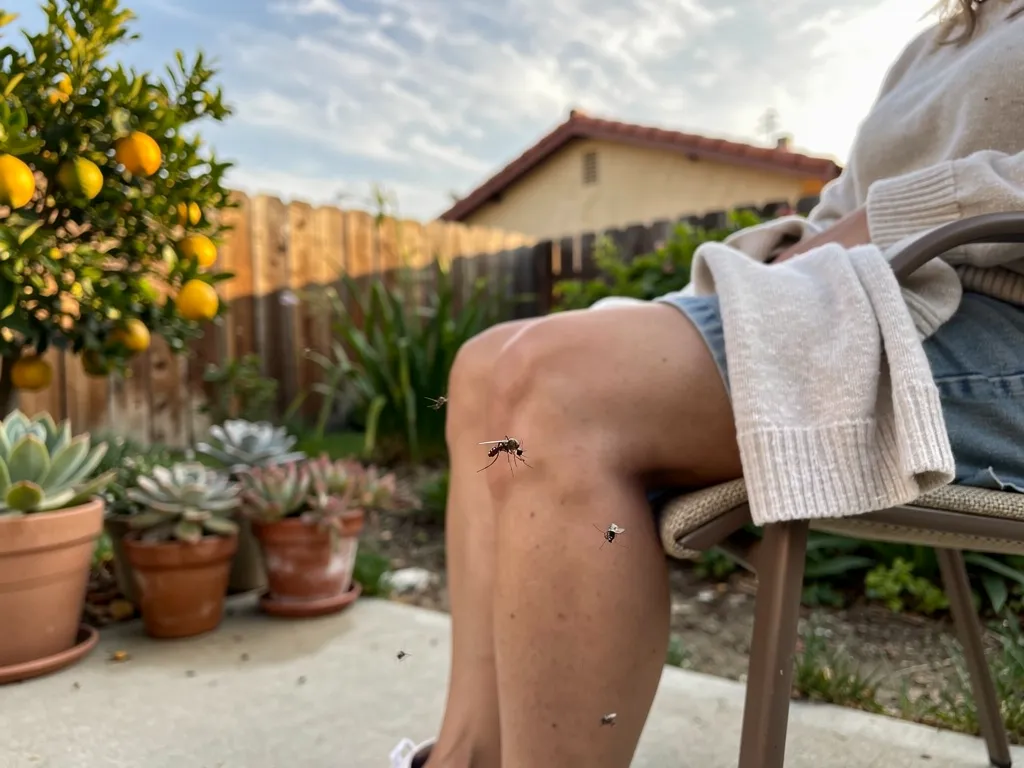
In colder parts of the country, winter does the pest control for you: a hard freeze knocks mosquito activity down to nothing for months. Southern California’s year-round mosquito climate never really delivers that reset. Our winters are mild, our warm spells show up out of season, and that’s usually enough to keep some mosquitoes going even in the “off” months.
Invasive Aedes mosquitoes, commonly called “ankle biters” and now common across the region, make this worse. These daytime biters, of which Aedes aegypti is the most widespread, are well suited to our conditions, they live close to homes, and their eggs are tough: they can survive dry stretches and hatch once water and warmth return. So a mild winter doesn’t clear the slate the way a cold one would.
Southern California Mosquito Activity Through the Year

Spring is the ramp-up. As things warm and the rains leave standing water behind, the mosquitoes that overwintered start breeding and the population climbs. This is the best time to get ahead of it, before numbers build.
Summer into early fall is the peak. Heat speeds the whole cycle, and in warm conditions some mosquitoes can go from egg to biting adult in as little as 7 to 10 days, so populations compound fast. This stretch is also when the health risk is highest. West Nile virus, carried mainly by Culex mosquitoes, typically peaks in Southern California from summer into early fall, and Los Angeles County has reported locally acquired dengue cases tied to invasive Aedes mosquitoes in 2024 and 2025.
Late fall and winter is the lull, not a shutdown. Activity drops as it cools, but a warm week or a wet, mild winter can wake things back up, especially anywhere water is sitting.
“Season” Is Really About Water and Heat
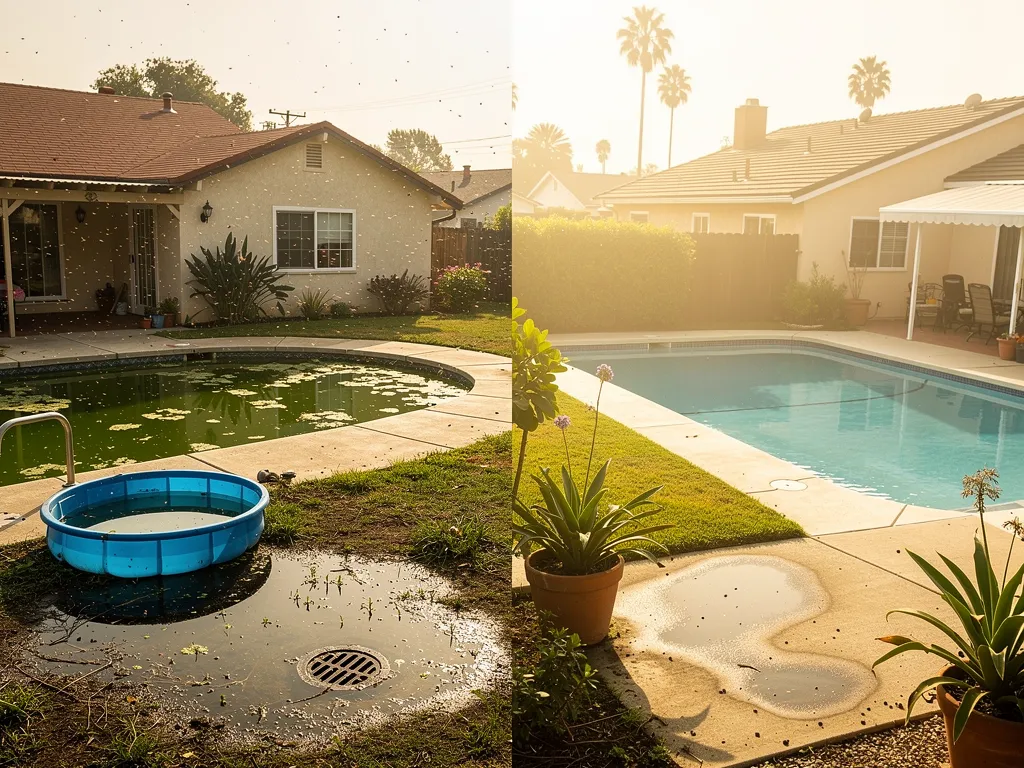
Here’s the part that matters more than the calendar: mosquito pressure on your property is driven by standing water and warmth, and you control one of those. A neglected pool, a clogged drain, overwatered beds, or a low spot that never dries can run its own little mosquito season regardless of the month. Add a heat wave and that source produces adults faster.
That’s why two yards on the same street can have completely different mosquito problems. The calendar sets the backdrop, but the conditions on your property decide how bad it actually gets.
Why the 2026 Season Is Running Long
Some years lean harder than others, and 2026 is one of them. Southern California has been moving through a stretch of extreme, record-setting heat late in the summer, paired with surges of monsoonal moisture that push up the humidity. That combination is hard on people and easy on mosquitoes: warmth speeds up breeding, and the added moisture helps adults survive and stay active, which tends to stretch the biting season later than usual.
The disease side is tracking the same way. West Nile virus, carried mainly by Culex mosquitoes, got off to one of its earliest and heaviest starts in about twenty years across Los Angeles County this season. An early, active West Nile year is a sign that conditions have favored mosquitoes for a while, and it is worth taking seriously rather than waiting out.
None of this changes the basic playbook. It just raises the stakes: if the season is running long and hot, the standing water on your property is producing mosquitoes for more of the year, and staying ahead of it matters more than it would in a mild season.
How to Stay Ahead of Mosquito Season
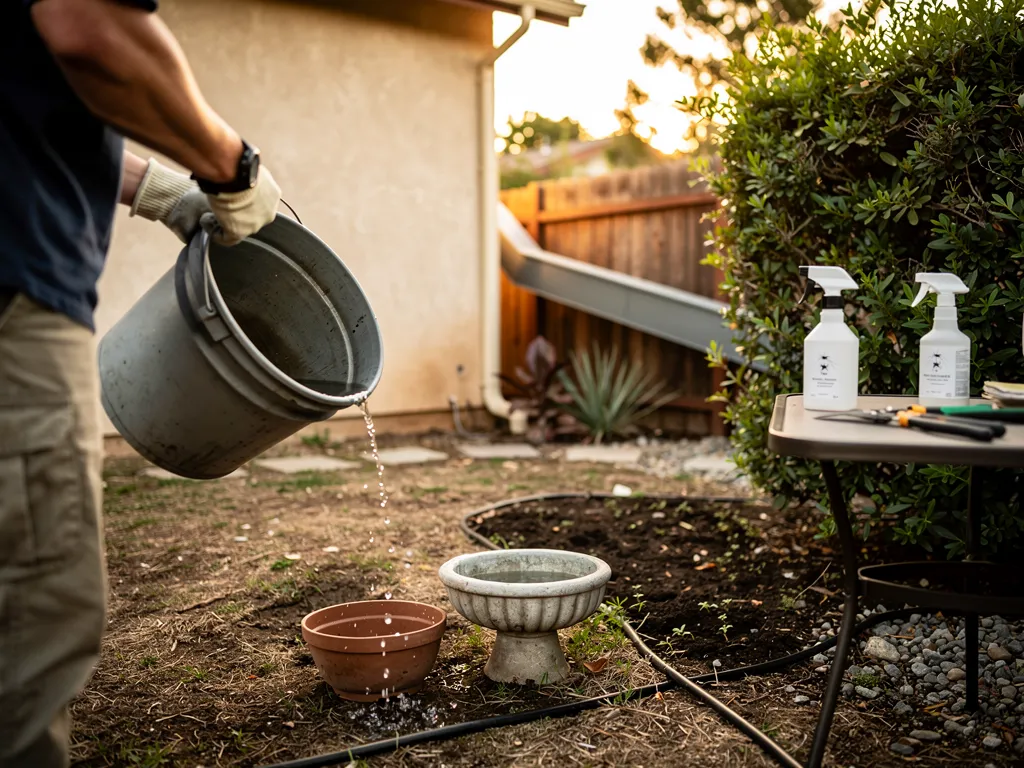
Because the season is long and the lull isn’t a true stop, staying ahead of mosquitoes works better than reacting once they’ve taken over. Start with the water: at least once a week, and twice is even better, empty and scrub anything that holds it, keep gutters clear, and fix the drainage and irrigation spots that stay wet. Cutting back dense, shady growth helps too, since that’s where adults rest during the heat of the day. When you’re outdoors during active stretches, an EPA-registered repellent used according to the label adds a layer of protection while you deal with the sources.
For the stretch when pressure is highest, a recurring program helps manage activity so the population has less room to build back up between treatments. TouchDown Pest Control offers a six-month seasonal mosquito program timed to cover the warm months when mosquitoes are worst. It works from two directions: a targeted treatment on the shaded areas where adult mosquitoes rest, plus mosquito breeding traps placed around the property that draw in egg-laying females and interrupt the breeding cycle, helping reduce the next generation between visits. The program costs $160 per month for six months, for a total seasonal cost of $960, and it’s built to manage new activity as conditions change through the season.
TouchDown Pest Control is locally owned and based in West Covina, working yards across the San Gabriel Valley, Inland Empire, and greater Los Angeles. Call (626) 966-5600 to talk through your property and whether the six-month seasonal mosquito program is the right fit before the next peak hits.
Frequently Asked Questions
When does mosquito season start in Los Angeles?Activity usually starts ramping up in spring as temperatures rise and rainwater leaves standing water behind. By late spring the population is climbing, which makes it a smart time to get ahead of them.
What are the worst months for mosquitoes in LA?Summer into early fall is the peak, roughly July through October. Heat speeds up breeding, and it’s also when the health risk is highest, since West Nile virus activity in Southern California typically peaks in this same stretch.
Do mosquitoes go away in the winter here?Activity drops when it cools, but Southern California doesn’t get a true off-season. Mild winters and warm spells keep some mosquitoes going, and invasive Aedes mosquito eggs can survive dry periods and hatch once warmth and water return.
When should I start mosquito control for the season?Before the peak is ideal. Getting ahead in spring or early summer keeps the population from building up. TouchDown Pest Control’s six-month seasonal program ($160 per month for six months, $960 for the season) is timed to cover the warm months when mosquitoes are worst.