
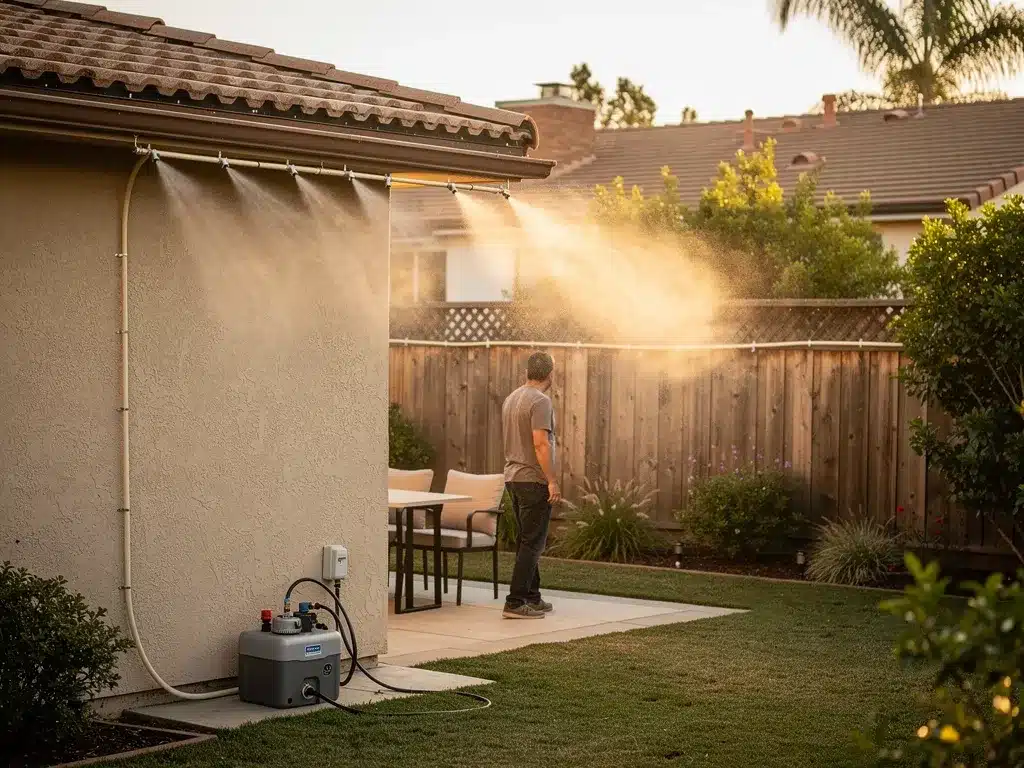
A backyard mosquito misting system may reduce adult mosquitoes in a defined treatment area, but it is not the right fit for every Los Angeles property. These systems require permanent installation, pesticide refills, and ongoing maintenance. They also do not replace the need to find and correct standing water. Before investing in one, it helps to compare the convenience of automatic misting with the cost, upkeep, and limits of the system.
How Mosquito Misting Systems Work
Residential misting systems use thin tubing and nozzles installed along eaves, fences, patios, or other parts of the treatment area.
The system connects to a reservoir and pump that release a fine insecticide mist at scheduled times or when manually activated. Many operate automatically at predetermined times, while some also allow manual activation.
Once installed, the system can treat the area with limited day-to-day effort from the homeowner. Whether that convenience justifies the cost and upkeep depends on the property.
When a Misting System May Make Sense
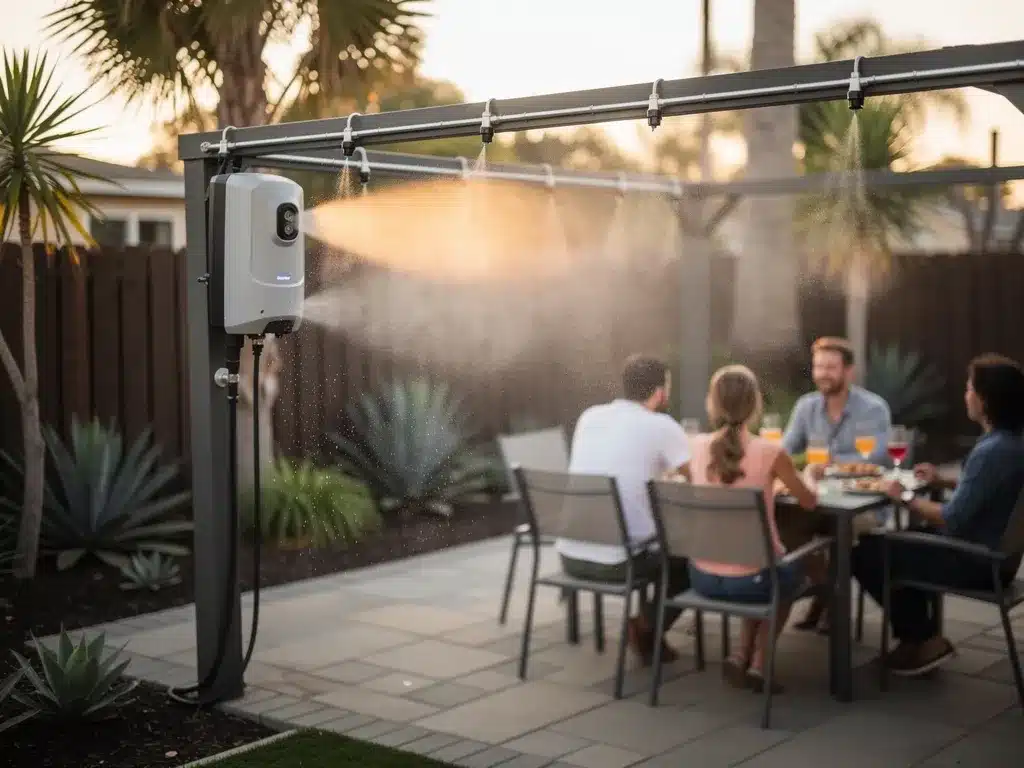
In a defined space like a patio or a small yard, a misting system can reduce the number of adult mosquitoes in the treatment zone, at least for a period after each cycle. If you entertain outdoors often and want something largely hands-off, that convenience is real, and some homeowners are satisfied with theirs. It is a reasonable option to consider, as long as you understand what it does not do.
Limitations to Consider
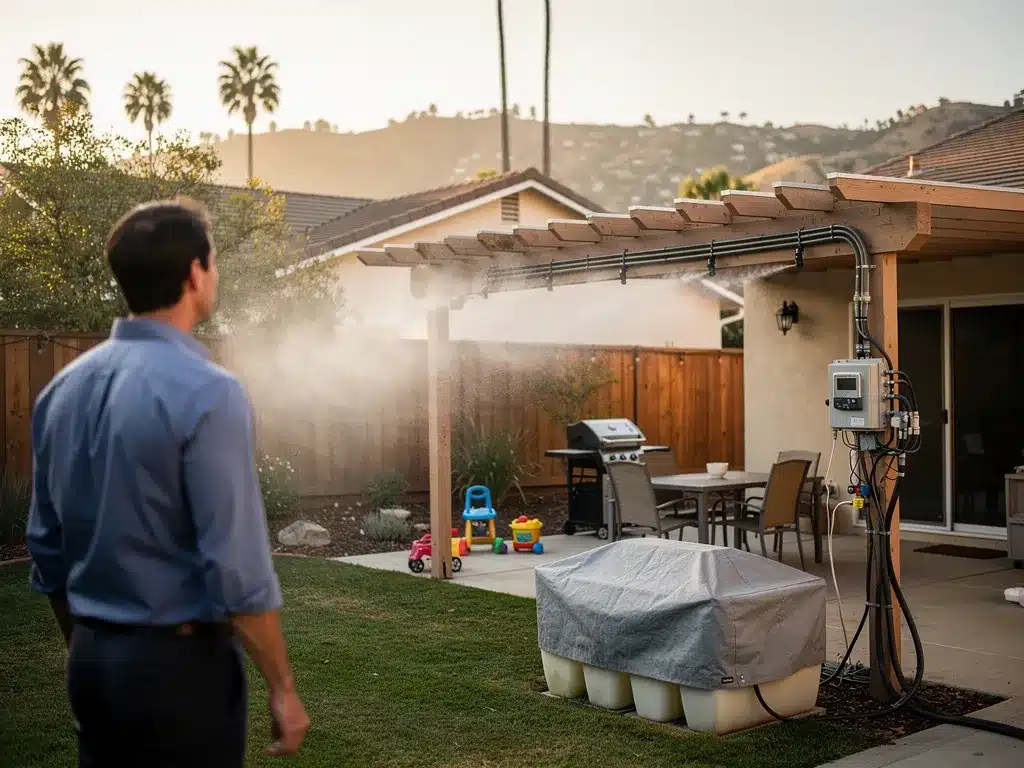
The U.S. Environmental Protection Agency provides specific safety guidance for residential misting systems. The American Mosquito Control Association raises additional concerns about systems that release pesticides at predetermined intervals without surveillance data guiding the treatment.
Automatic application
Many systems release insecticide at set times. That can result in pesticide being released without current mosquito-surveillance information showing whether treatment is needed at that moment. AMCA also warns that repeated pesticide applications without surveillance-based decision-making may contribute to insecticide resistance.
Non-target exposure
Because the mist can reach non-target insects, nozzle placement, application timing, and strict compliance with the product label matter. Homeowners should ask how the system limits exposure to bees, butterflies, and other beneficial insects.
Breeding sources still require attention
Misting systems primarily target adult mosquitoes in the treatment zone. They generally do not remove or correct the standing-water sources where immature mosquitoes develop. A misting system does not replace source reduction. Unless standing water is found and corrected separately, the property may continue producing new mosquitoes.
Installation and maintenance costs
Beyond the upfront installation, these systems carry ongoing costs for pesticide refills and maintenance, along with eventual repair or replacement of pumps, tubing, and nozzles.
Misting Versus Property-Specific Mosquito Service
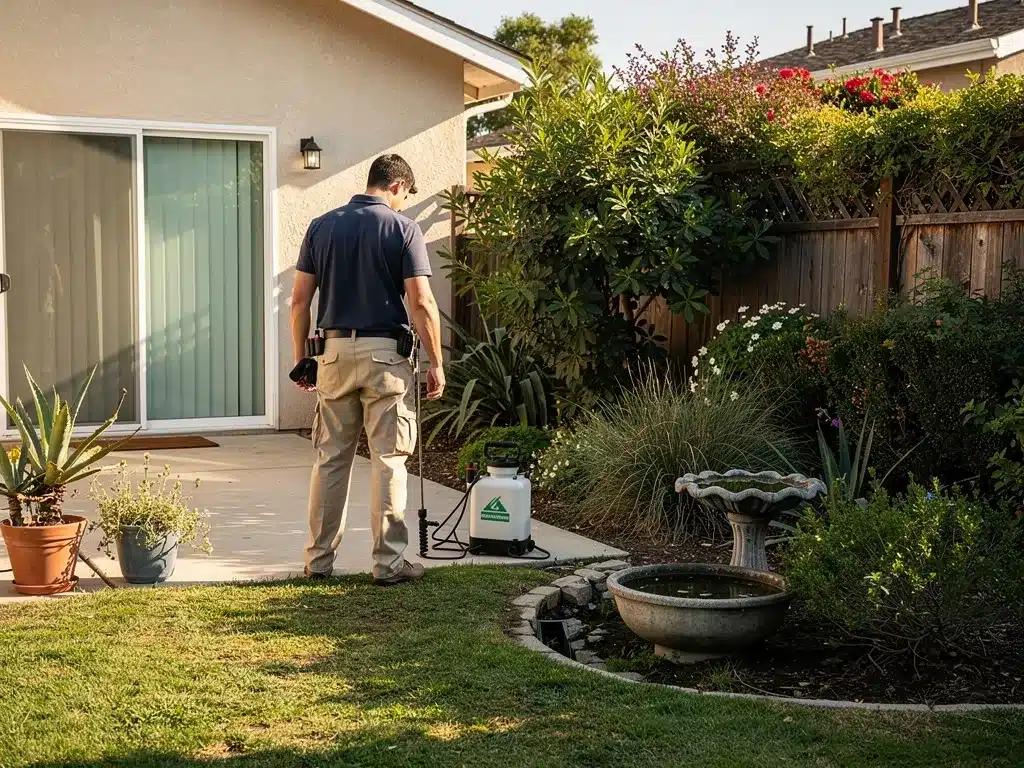
TouchDown also uses an insecticide treatment, but it is not released automatically. A technician first inspects the property to identify standing water, dense vegetation, and shaded resting areas. That inspection determines where treatment is needed. When standing water or drainage problems are found, the technician explains what should be emptied, corrected, or monitored.
Treatment is based on what the inspection finds. The product is applied to identified mosquito resting areas and used according to its label, rather than released automatically at predetermined times. The program also includes mosquito breeding traps, which draw in egg-laying females and interrupt the breeding cycle. This approach combines adult mosquito treatment with breeding-cycle management, guided by the conditions a technician finds on the property rather than a preset timer.
For homeowners who do not want a permanent installation, a seasonal program offers another option: property-specific treatment without installing a fixed misting system.
Questions to Ask Before Installing a Misting System
Which pesticide will the system use?
Is that product labeled for automatic residential misting?
How frequently will it release pesticide?
Can the timing be adjusted or suspended?
How are people, pets, and food protected during application?
How are non-target insects and neighboring properties protected?
What maintenance and refill costs should you expect?
Does the service include standing-water inspection and source reduction?
What California licensing requirements apply to the installer?
TouchDown’s Seasonal Option
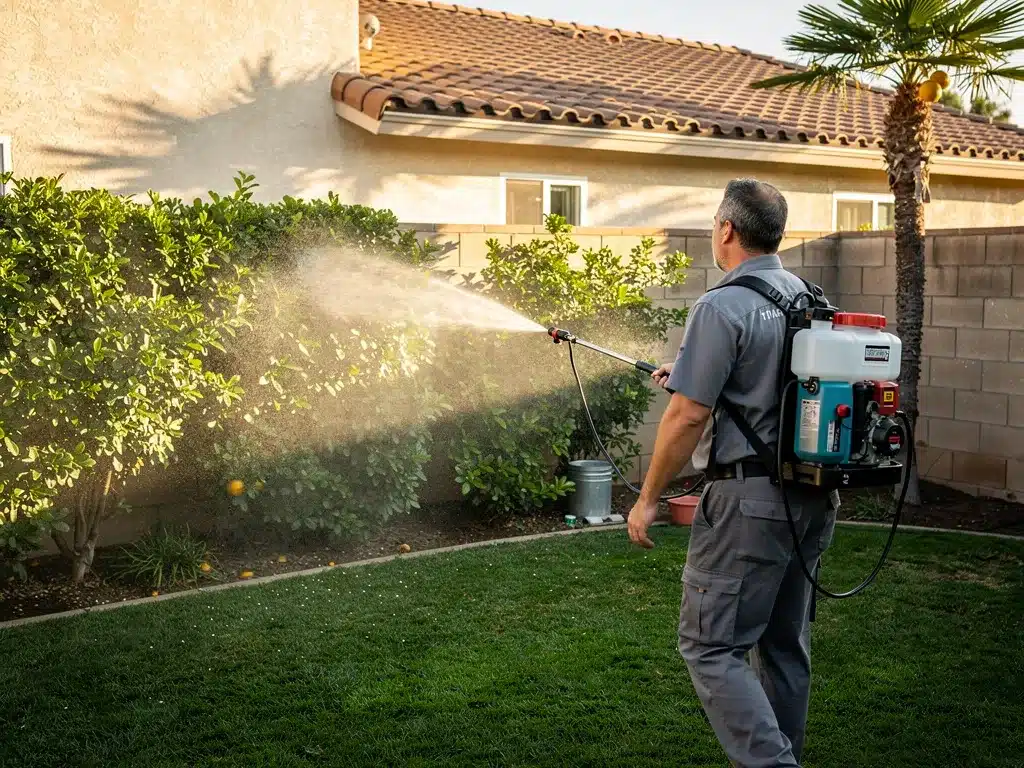
TouchDown Pest Control offers seasonal mosquito service for six months, covering the warmer stretch when mosquito activity is usually highest. The program costs $160 per month for six months, for a total seasonal cost of $960. It does not eliminate every mosquito, but it pairs targeted treatment of resting areas with breeding-cycle management, based on what a technician finds on your property.
TouchDown Pest Control is locally owned and based in West Covina, working with homeowners across the San Gabriel Valley, Inland Empire, and greater Los Angeles. Call (626) 966-5600 to talk through your property before you commit to any permanent system.
Frequently Asked Questions
Do backyard mosquito misting systems actually work?
They can reduce adult mosquitoes in a defined treatment area, like a patio, for a period after each cycle. They primarily target adult mosquitoes in that zone, and they do not remove the standing water where mosquitoes develop, so new mosquitoes can keep emerging from untreated sources.
Are mosquito misting systems safe for pets and pollinators?
The insecticides are EPA-registered and must be used according to their labels, which address people, pets, and non-target species. Because the mist can reach beneficial insects like bees and butterflies, nozzle placement, application timing, and label compliance matter. Ask any installer how the system limits that exposure.
What costs should I consider before installing a mosquito misting system?
Consider the installation price, pesticide refills, routine maintenance, repairs, and eventual replacement of pumps, tubing, or nozzles. Ask for the total first-year cost and estimated annual operating cost before agreeing to an installation.
How is a seasonal mosquito service different from a misting system?
A misting system is a fixed installation that typically runs on a schedule. A seasonal service is property-specific: a technician inspects the yard, treats the resting areas based on what is found, and manages the breeding cycle, rather than releasing pesticide automatically. It is another option for homeowners who do not want a permanent system.