
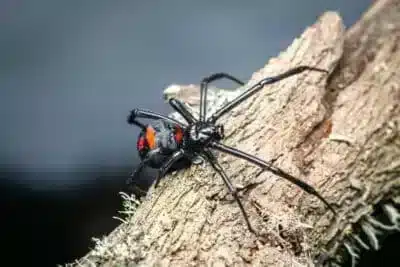
Finding a widow spider around your garage, patio furniture, storage area, or children’s play equipment can be unsettling. But identifying the spider correctly is the first step toward handling the situation safely.
Here in Southern California, homeowners are more likely to encounter western black widows and brown widows—not brown recluse spiders. In fact, brown recluse spiders are not established in California.
Here’s how to recognize the widow spiders found locally, where they tend to hide, and what you can do to make your property less inviting to them.
Which Widow Spiders Are Found in Southern California?
Both western black widows and brown widows are established in Southern California. They share several characteristics, including rounded abdomens, long legs, irregular webs, and a preference for protected areas where they are less likely to be disturbed.
Despite their reputation, widow spiders generally stay close to their webs and avoid people. A bite is more likely when a spider is accidentally pressed against the skin or disturbed in a hidden area.
That is why it is important to look before reaching into storage boxes, moving outdoor furniture, or working in dark corners around the property.
How to Identify a Western Black Widow
The mature female western black widow is the spider most homeowners recognize. It typically has:
- A smooth, glossy black body
- A large, rounded abdomen
- A red or reddish-orange hourglass marking underneath the abdomen
- A strong, irregular web rather than a symmetrical circular web
Black widows usually choose sheltered, dry, undisturbed locations. Around Southern California properties, they may be found:
- Inside garages and sheds
- Beneath outdoor furniture
- Around woodpiles and stored materials
- Inside meter boxes
- Near block walls and fences
- Under decks or outdoor equipment
- In cluttered corners that are rarely disturbed
The red hourglass is located underneath the spider, so it may not be visible without getting dangerously close. Do not handle or intentionally turn over a suspected widow spider to confirm its identity.
How to Identify a Brown Widow
Brown widows can vary considerably in appearance. They are generally tan, brown, or gray with patterned markings on the abdomen and legs. Because immature black widows may also appear brown or patterned, identifying a spider by color alone can be difficult.
One of the clearest signs of brown widow activity is the egg sac. Unlike the smoother egg sacs produced by black widows, brown widow egg sacs are covered with small pointed projections and resemble spiky balls.
Brown widows are frequently found around outdoor structures and objects, including:
- Beneath plastic patio furniture
- Under tables and chairs
- Around fences and gates
- Beneath playground equipment
- Inside recessed handles or protected openings
- Around planters, trash containers, and stored items
Brown widow bites are generally reported as less medically severe than black widow bites, but homeowners should still avoid direct contact with the spider or its web.
What About Brown Recluse Spiders?
Brown recluse spiders are frequently blamed for unidentified spiders and unexplained skin wounds, but they are not established in California.
Some native recluse species occur in limited desert regions of the state, but they are not the spiders homeowners typically encounter around West Covina or the San Gabriel Valley. For local residential properties, black widows and brown widows are the more relevant concern.
A brown or tan spider should not be identified as a brown recluse based on color or a violin-shaped marking alone. Several harmless spiders can have similar markings.
Why Widow Spiders Settle Around Homes
Widow spiders go where they can find shelter and a steady supply of insects. A property with plenty of hiding places and insect activity gives them both.
Conditions that may support spider activity include:
- Cluttered garages, sheds, and storage areas
- Furniture or equipment that remains undisturbed
- Wood, cardboard, or debris stored near the house
- Gaps around doors, windows, and utility openings
- Exterior lighting that attracts insects
- Thick vegetation or ground cover against the structure
- Existing insect activity around eaves, patios, and garages
Seeing one spider does not always mean there is a large infestation. Repeated sightings, numerous webs, or multiple egg sacs, however, may point to conditions that should be inspected more closely.
How to Reduce Widow Spider Activity
You may not be able to eliminate every spider outdoors, but you can reduce the places where widow spiders are likely to settle.
Remove clutter and hiding places
Organize garages, sheds, and storage spaces. Avoid leaving cardboard boxes, unused containers, firewood, or equipment undisturbed for long periods. Wear gloves when moving items that have been stored outside or in a dark area.
Inspect outdoor furniture and play equipment
Look underneath chairs, tables, toys, play structures, and equipment before moving or using them. Brown widows are especially likely to build webs in protected spaces beneath outdoor objects.
Keep vegetation away from the structure
Trim shrubs, vines, and other vegetation touching the home. Removing dense growth near exterior walls makes it easier to spot webs and reduces sheltered areas where spiders and insects can gather.
Seal potential entry points
Repair damaged screens and seal gaps around doors, windows, utility lines, and the foundation. This can help reduce both spiders and the insects they feed on.
Address the insects attracting them
Spiders remain where food is available. Reducing flies, mosquitoes, ants, and other insects around the property can make the area less favorable for spiders. Outdoor lighting can contribute to insect activity. Where practical, keep lights away from doors and windows or use lighting designed to attract fewer insects.
Remove webs carefully
Regular web removal can discourage spiders from settling in frequently used areas. Use a long-handled tool rather than placing your hands near a web, spider, or egg sac. Avoid reaching into a hidden space when you cannot clearly see what is inside.
What to Do If You Find a Suspected Widow Spider
Keep children and pets away from the area. Do not attempt to pick up, crush, or closely examine the spider with your bare hands.
A vacuum may be appropriate for an isolated spider if it can be used without bringing you close to the web. The vacuum contents should be secured and discarded carefully afterward.
If the spider can be photographed from a safe distance, the image may help with identification. Do not risk another bite by attempting to capture it.
If you find multiple spiders, egg sacs, or webs in difficult-to-reach areas, professional service may be the safer option. A pest-control inspection can identify where the spiders are harboring, what may be attracting them, and which parts of the property require attention.
What to Do After a Suspected Spider Bite
Many skin irritations and wounds blamed on spiders are never confirmed as spider bites. If you believe a widow spider may have bitten you:
- Remain calm
- Wash the area with soap and water
- Apply a cold, damp cloth to help reduce swelling
- Avoid cutting the area or attempting to remove venom
- Contact a medical professional for guidance
Seek immediate medical care for severe pain, muscle cramping, difficulty breathing, significant weakness, or other serious symptoms.
When to Call TouchDown Pest Control
Consider scheduling a professional inspection when:
- Widow spiders or egg sacs repeatedly appear around the property
- Webs are found near doors, play areas, patios, or frequently used spaces
- Spiders are harboring inside a garage, shed, or difficult-to-reach location
- You are unsure what type of spider you found
- Spider activity continues despite cleaning, decluttering, and web removal
At TouchDown Pest Control, we look beyond the spider itself. We inspect the areas where spiders are hiding, identify the conditions supporting their activity, and recommend a treatment and prevention approach based on what we find.
If you are seeing black widows, brown widows, or recurring spider activity around your home or business, contact TouchDown Pest Control to schedule an inspection in the San Gabriel Valley or Inland Empire.
The local species and safety guidance in this article aligns with UC Statewide IPM’s widow spider guidance, its California spider overview, and CDC/NIOSH first-aid recommendations.