Are Eco-Friendly Pest Treatments Actually Effective?
When pests invade our homes — whether ants in the kitchen, mosquitoes in the backyard, or rodents in the attic — many homeowners today are turning to eco-friendly pest treatments in hopes of protecting their families, pets, and the environment. But do these green solutions really work as well as traditional pesticides? And are they truly safer?
In this comprehensive guide, we’ll unpack:
- How eco-friendly pest treatments work
- When they’re effective — and when they’re not
- Real research on safety for children and pets
- Best practices for pest prevention
Plus, we’ll answer the most important questions homeowners ask about green pest solutions.
Before we begin, if you’re considering professional help, specialized providers like Touchdown Pest Control offer both traditional and green pest management options tailored to your needs.
What Are Eco-Friendly Pest Treatments?
Eco-friendly pest treatments are methods and products designed to control pests using materials and strategies that have a reduced impact on people, pets, and the environment. These can include:
- Botanical or plant-based pesticides
- Biological agents (like beneficial nematodes)
- Physical barriers and traps
- Behavioral deterrents (e.g., essential oil repellents)
- Habitat modification
Unlike conventional synthetic pesticides, eco-friendly products are marketed as “safer” and less toxic — but their effectiveness and safety vary widely by product and pest type.
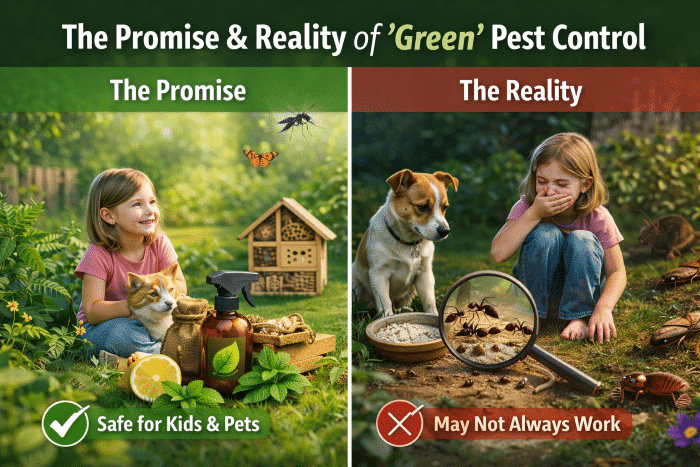
The Promise & Reality of “Green” Pest Control
1. Safety for Kids and Pets
A major reason homeowners choose eco-friendly pest control is safety. Chemical pesticides can pose risks, including:
- Neurological effects in children
- Toxicity to pets
- Environmental contamination
A review by the U.S. Environmental Protection Agency (EPA) highlights that children and animals are especially vulnerable to certain pesticides due to differences in metabolism and behavior patterns (e.g., crawling, hand-to-mouth contact). EPA continues to evaluate the safety of pest control products and encourages integrated approaches.
Eco-friendly options may lower exposure to harmful chemicals, but “eco-friendly” does not automatically mean non-toxic. Natural pesticides such as pyrethrin, rotenone, and essential oils can still pose hazards at high concentrations. The key is proper use and understanding limitations.
2. Effectiveness Compared to Traditional Treatments
Where Eco Methods Work Well
Some eco-friendly approaches have strong evidence supporting their performance:
✔ Biological Controls
Beneficial organisms like predatory insects or nematodes target specific pests without harming people or wildlife. For example:
- Nematodes targeting soil-dwelling pests
- Ladybugs are reducing aphid populations in gardens
Scientific studies show biological controls can be effective when properly matched to the pest species.³
✔ Physical Barriers & Traps
Sticky traps, mesh screens, and exclusion tactics can significantly reduce pest entry without the use of chemicals.
✔ Behavioral Repellents
Citronella, cedar oil, and similar plant-based products can repel mosquitoes or ants, especially in outdoor settings.
Where Eco Methods Fall Short
Eco-friendly treatments tend to be less effective in certain scenarios:
⨯ Heavy Infestations
For large ant colonies, termites, or persistent cockroach populations, natural repellents and barriers may not reach the root of the problem.
⨯ Seasonal Surges
Mosquito explosions after rain or rodent spikes in winter often require more potent treatments combined with habitat management.
⨯ Limited Residual Action
Many green products break down faster, offering shorter protection periods compared to some synthetic pesticides.
In short: eco-friendly solutions can work — but often best as part of an Integrated Pest Management (IPM) strategy.
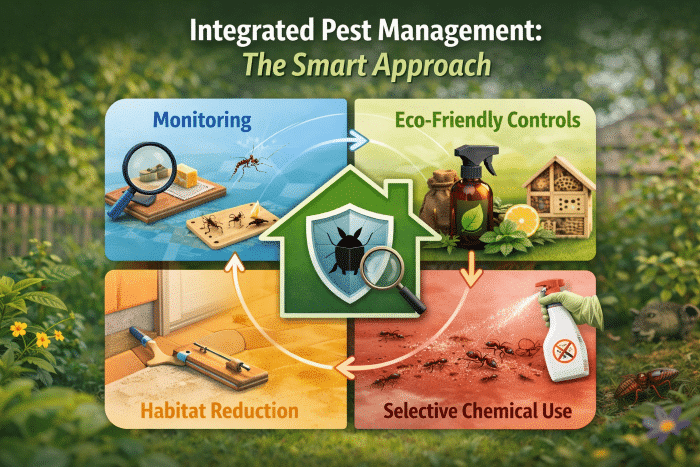
Integrated Pest Management: The Smart Approach
Integrated Pest Management (IPM) combines:
- Pest monitoring
- Sanitation and habitat reduction
- Eco-friendly control methods
- Selective chemical use when needed
This approach is endorsed by institutions such as the National Integrated Pest Management Network, which emphasizes combining prevention with the least hazardous treatments.
IPM aims to balance safety with results, reducing pesticide use overall and applying targeted control only when necessary.
Eco-Friendly Options for Common Household Pests
Here’s how green treatments perform against typical pests:
Pest | Eco Solution | Effectiveness |
Ants | Vinegar, essential oils, and bait stations | Moderate |
Mosquitoes | Citronella, fans, traps | Good for repelling |
Rodents | Traps, sealing entry points | Strong prevention |
Termites | Nematodes, barriers | Limited, often needs pro service |
Cockroaches | Baits, diatomaceous earth | Moderately effective |
Note: Many products marketed as “eco” vary widely in quality and consistency.
Industrial facilities are frequently subject to audits and inspections. Food-grade warehouses may need to comply with safety regulations tied to agencies like the Occupational Safety and Health Administration and the FDA.
Rodent activity can trigger:
- Failed inspections
- Written violations
- Corrective action plans
- Increased audit frequency
For businesses supplying major retailers, a single failed third-party audit can jeopardize contracts.
Rodent prevention isn’t just maintenance — it’s risk management.
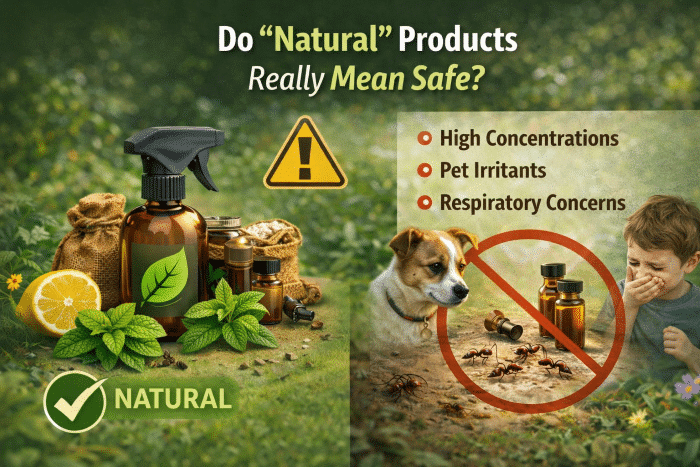
Do “Natural” Products Really Mean Safe?
The word natural is not regulated on pest product labels. A natural pesticide can still have:
- Toxic effects at high concentrations
- Irritation risks for pets
- Respiratory triggers for children
For example, essential oils like peppermint and clove are often recommended for ant control, but concentrated oils can irritate skin and airways if misused.
To understand true safety profiles, always look for products evaluated by organizations like the EPA’s Safer Choice Program, which reviews ingredients for reduced health hazards.
Best Practices for Eco-Friendly Pest Control
Follow these steps to maximize results and safety:
✅ 1. Start with Prevention
Seal cracks, store food properly, and keep moisture levels low.
✅ 2. Use Targeted Controls
Match treatment to pest behavior — e.g., bait stations for ants.
✅ 3. Monitor Regularly
Track pest activity to evaluate whether treatments are working.
✅ 4. Read Product Labels Carefully
Even plant-based pesticides require safe handling.
✅ 5. Seek Professional Assessment
If infestation persists, professionals can tailor an IPM plan using eco-friendly and conventional tools as needed.
When to Call a Professional
If you notice:
- Recurring pest problems
- Evidence of termite damage
- Large or hard-to-reach infestations
- Pets or family members with sensitivities
A professional pest management service (like Touchdown Pest Control) can assess your situation, recommend eco-friendly or hybrid approaches, and ensure treatments comply with safety standards.
Conclusion
Eco-friendly pest treatments can be effective — but not always. Many green methods work well for prevention, low-level infestations, and outdoor pests, and they carry potential safety benefits for kids and pets when used correctly.
However, they’re not a universal replacement for conventional controls, especially in heavy infestations. The most successful approach is one that combines prevention, monitoring, eco-friendly treatments, and professional expertise when necessary.
For personalized guidance on safe, effective pest control solutions, including environmentally responsible options, reach out to professionals who can tailor a plan to your needs.
People Also Ask (FAQ)
1. What is the difference between eco-friendly pest control and traditional pest control?
Eco-friendly pest control focuses on using plant-based products, biological controls, physical barriers, and Integrated Pest Management (IPM) strategies to reduce environmental and health risks. Traditional pest control often relies more heavily on synthetic chemical pesticides that may have longer residual effects but can carry higher toxicity risks if misused.
2. Are eco-friendly pest treatments safe for babies and pets?
Eco-friendly pest treatments are generally designed to reduce toxicity risks, making them safer for households with children and pets. However, “natural” does not always mean harmless. Some botanical ingredients and essential oils can still cause irritation or allergic reactions. Always follow label instructions and consult professionals for sensitive households.
3. Do eco-friendly pest control methods work for serious infestations?
Eco-friendly treatments can be effective for light to moderate infestations. For severe or long-standing infestations — such as termites, large rodent populations, or widespread cockroach activity — a combination of eco-friendly methods and targeted professional treatments may be necessary for complete elimination.
4. How long do eco-friendly pest treatments last?
Many eco-friendly products break down faster than conventional pesticides, meaning they may require more frequent reapplication. Their shorter residual life is often beneficial for environmental safety, but can reduce long-term protection if not maintained properly.