
Yes, Long Beach families can get rid of ants, rats, roaches, and termites without turning their home into a chemical zone, and the good options are more effective than most people expect. Safe, eco-friendly pest control Long Beach homeowners can actually live with comes down to three moves: find and seal the gaps pests use to get inside, place products where dogs and cats physically cannot reach them, and treat only the spots that need treating instead of misting every baseboard in the house. That method has a name in the industry, Integrated Pest Management, and the U.S. Environmental Protection Agency recommends it specifically for homes with kids and animals.
If you live here, you already know the pest list: Argentine ants marching across the kitchen counter in July, roof rats in the garage rafters, German cockroaches in an older fourplex, subterranean termites quietly working on a Craftsman foundation. What most homeowners do not know is that California law has already forced this entire industry to get safer, and the rules changed more recently than you would guess. This guide walks through what is available in 2026, what “pet-safe” honestly means, what it does not mean, and how to tell a real low-impact program from a marketing label.
What “Eco-Friendly” and “Pet-Safe” Actually Mean
Eco-friendly pest control means the least toxic method that solves the problem is used first, and stronger products are used last, in the smallest amount, in the most targeted place. It is a decision-making order, not a single bottle of green spray. Pet-safe means no product is left where an animal can lick it, step in it while wet, or eat the poisoned prey that carries it. Those two ideas overlap heavily, and both of them are measured by how a technician works, not by what the label on the truck says.
This distinction matters because “natural” and “safe” are not the same word. Plenty of plant-derived products are genuinely hazardous to certain animals, and plenty of conventional products are harmless once dry. Judge a program by its methods and its placement decisions.
Integrated Pest Management Is the Foundation
Integrated Pest Management, usually shortened to IPM, is a six-part process that professionals follow in order:
- Inspect the property to find where pests live, breed, and enter
- Identify the exact species, because a roof rat and a house mouse need different setups
- Correct the conditions attracting them, such as leaks, clutter, and food access
- Exclude them physically by sealing gaps, screening vents, and trimming contact points
- Treat with the lowest-risk product that will work, applied only where needed
- Monitor results and adjust instead of repeating the same spray on a schedule
The reason this works better than blanket spraying is simple biology. Broad sprays kill the visible insects but leave the nest, the moisture source, and the entry hole untouched, so the population rebuilds. Sealing a gap under a door sweep solves the ant trail permanently. Homes with older wood-frame construction and mature landscaping, which describes a huge share of the housing in this city, respond especially well to targeted pest control services designed around Long Beach housing stock rather than generic quarterly spraying.
What “Pet-Safe” Does Not Mean
Pet-safe does not mean pesticide-free, and it does not mean essential oils. Cats lack an efficient liver enzyme called glucuronosyltransferase, which is how most mammals break down and clear certain compounds. Because of that gap, tea tree, peppermint, eucalyptus, and citrus oils can build up in a cat’s liver and cause vomiting, severe lethargy, and in bad cases liver failure. A homeowner spraying “natural” oil around the baseboards can hurt a cat worse than a licensed technician placing a sealed bait station.
The lesson is not that natural products are bad. The lesson is that dose, placement, and species matter more than the marketing category on the front of the bottle.
Why Long Beach Homes Attract Pests in the First Place

Long Beach has a coastal climate with mild winters, which means pests here never get a hard seasonal reset the way they do inland or in colder states. Add a working international port, aging housing stock, and dense multi-unit neighborhoods, and you get year-round pressure instead of a summer spike. Understanding the local drivers explains why exclusion work outperforms spraying in this specific city.
The conditions that push pests indoors here include:
- Persistent coastal moisture, including the June Gloom marine layer, which softens unsealed wood in attics and eaves and draws termites
- Port and rail activity, which continuously reintroduces rodent populations into surrounding residential blocks
- Older wood-frame and Craftsman homes in areas like California Heights and Bluff Park, with settling foundations and gaps around utility penetrations
- High-density housing near restaurants, especially around Alamitos Beach and downtown, which raises cockroach and rat pressure across shared walls
- Irrigated, heavily landscaped yards, which give Argentine ants the moisture and aphid honeydew they need to build supercolonies
Long Beach is also unusual administratively. According to the City of Long Beach Department of Health and Human Services, the city runs its own Vector Control Program rather than relying entirely on a county district, covering most of the city except areas east of Lakewood Boulevard and a small northwest section. City crews treat public shorelines, harbors, and parks for rodents, but private property remains the homeowner’s responsibility. That split is exactly why the rat you see in your yard may be coming from a source no one is treating.
Eco-Friendly and Pet-Safe Pest Control Long Beach Families Can Actually Use
The practical toolkit for pet-safe pest control Long Beach households can rely on breaks into six categories, and a good program uses several at once. None of these methods requires you to leave your home for a day or board your animals for a weekend. Most of them work by making the structure unavailable rather than by saturating it with product.
Exclusion and Physical Sealing
Exclusion is the single most effective non-toxic method available, and it is permanent. A technician seals rodent entry points with steel wool, copper mesh, sheet metal, or hardware cloth, then addresses door sweeps, weep holes, vent screens, roof-to-wall junctions, and utility line gaps. Rats need roughly a half-inch opening and mice need about a quarter-inch, so the work is detailed. Once done, no product is needed to keep them out.
Targeted Baiting in Tamper-Resistant Placements
Gel baits and granular baits work because insects carry the active ingredient back to the colony, which kills the nest rather than the scouts. Applied with a syringe into wall voids, behind electrical plates, under cabinet lips, and into cracks, the bait is physically inaccessible to a dog or cat. Compare that to a surface spray across a kitchen floor, which a pet walks through and then grooms off its paws. Same goal, dramatically different exposure.
Insect Growth Regulators
Insect growth regulators, or IGRs, interrupt the insect molting hormone so larvae never reach breeding adulthood. Because mammals do not use that hormone system, IGRs have very low toxicity for dogs, cats, and people. They are the backbone of pet-safe flea work and are heavily used against cockroaches. IGRs do not produce instant results, and any honest company will tell you that upfront, since they work over one to two life cycles.
Reduced-Risk and Botanical Products
Reduced-risk products include botanical actives, diatomaceous earth, boric acid dusts placed in voids, and low-concentration modern formulations. Applied by a licensed technician who understands re-entry timing, these handle most ants, spiders, silverfish, earwigs, and crickets. The key detail is placement in voids and cracks rather than open floors where animals rest.
Trapping and Mechanical Control
Snap traps in inaccessible or secured locations, multi-catch stations, and monitoring devices remove rodents without a single gram of poison entering the food chain. This matters in Long Beach specifically, because a poisoned rat that dies in the open can be eaten by a neighbor’s cat, a coyote, or a hawk. Trapping also gives a clear count of how bad the problem is, which spraying never does.
Habitat and Moisture Correction
Fixing what attracts the pest prevents the next infestation. That means repairing slab leaks and dripping hose bibs, correcting irrigation overspray against the foundation, clearing fruit that drops from citrus trees, trimming branches away from the roofline, and storing pet food in sealed containers instead of open bags in the garage. Homeowners can do most of this themselves, and it does more long-term good than an extra treatment. Families who want a full walkthrough of these conditions before committing to any service can start with a free inspection and get a written list of what needs correcting.
California Law Already Pushed Rodent Control Toward Safer Methods

California has banned most anticoagulant rat poisons statewide, and this is the most important fact Long Beach pet owners are not being told. Between 2020 and 2025, the legislature restricted every commonly used anticoagulant active ingredient, largely because of secondary poisoning in mountain lions, bobcats, owls, and domestic animals. If a company still offers you standard anticoagulant rodent bait for a home, that is a compliance problem, not a service option.
| California law | Signed | Active ingredients restricted | Effective |
| AB 1788, California Ecosystems Protection Act of 2020 | September 29, 2020 | Brodifacoum, bromadiolone, difenacoum, difethialone (second-generation) | January 1, 2021 |
| AB 1322 | October 13, 2023 | Diphacinone (first-generation) | January 1, 2024 |
| AB 2552, Chapter 571, Statutes of 2024 | September 25, 2024 | Chlorophacinone and warfarin (first-generation) | January 1, 2025 |
The California Department of Pesticide Regulation confirmed the current status in enforcement letter ENF 24-20, issued December 20, 2024. As of January 1, 2025, most uses of chlorophacinone and warfarin are prohibited, and prohibited uses explicitly include residential and home applications. Selling or using first- or second-generation anticoagulant rodenticides in violation of the law carries a civil penalty of up to $25,000 per day per violation.
Why does this matter to a pet owner rather than a lawyer? Second-generation anticoagulants have a half-life of more than 100 days in a rodent’s liver, according to the legislative findings in AB 1322. A rat can carry a lethal dose around for months, and any animal that catches and eats it absorbs that dose. The practical result is that legitimate rodent control in Long Beach today is built on exclusion, trapping, sanitation, and habitat correction, which is exactly what a responsible program was doing anyway.
Pet-Safe Options by Animal Type
Different animals carry different risk, and a treatment plan should be adjusted for the specific pets in the home. Tell your technician what lives in the house before the first visit, including animals in cages and tanks.
Cats Carry the Highest Risk
Cats are the most sensitive household pet to insecticides, and the reason is metabolic. Because of that same limited glucuronide conjugation pathway, cats cannot clear pyrethroids the way dogs can. Veterinary sources including MSPCA-Angell and VCA Animal Hospitals document that pyrethroid toxicity in cats causes tremors, facial and ear twitching, muscle spasms, incoordination, and seizures, and that it can be fatal without prompt treatment.
Concentration is the deciding factor, and the numbers are worth knowing:
- Topical flea products formulated for dogs can contain 45 to 65 percent permethrin, and applying one to a cat is the leading cause of feline pyrethroid poisoning
- Household premise sprays and treated fabrics typically run under 1 percent, where toxicity is rarely seen
- Systemic toxicosis generally requires concentrations above roughly 5 to 10 percent
- Wet product is the hazard; once a pyrethroid application has fully dried and bonded to a surface, usually in 1 to 4 hours, a cat brushing against it is generally safe
The practical rule for cat households is strict drying time, closed doors during application, and bait placed in voids instead of sprayed on open surfaces.
Dogs and Ingestion Risk
Dogs are less chemically sensitive than cats but far more likely to eat something they should not. The main dog risks are chewing open a bait station, digging up a granular application, or catching a poisoned rodent. All three are solved by placement rather than product choice, using tamper-resistant stations anchored in locations a dog cannot access, granules watered in properly, and traps instead of poison wherever a pet has yard access. Ask specifically where every station will sit and confirm you can see the map.
Birds, Fish, Reptiles, and Backyard Chickens
Birds and fish are far more sensitive to airborne and waterborne residue than dogs or cats. Cover aquariums and turn off air pumps during any interior application, relocate bird cages to an untreated room or off-site for the visit, and keep reptile enclosures sealed. Backyard chickens in Long Beach add a food-safety layer, since anything applied near a coop or run needs to be cleared for use around laying hens. A technician who cannot answer that question confidently should not be treating near the coop.
What a Pet-Safe Treatment Visit Looks Like Step by Step
A properly run low-impact visit follows a predictable sequence, and knowing it helps you spot a company that is skipping steps. This is the order Touchdown Pest Control technicians work in, and it is the order any reputable local company should follow. The whole appointment usually runs 45 to 90 minutes for a first service.
- Full interior and exterior inspection, including attic, garage, crawl space, perimeter, and yard, before anything is applied
- Species identification and a written findings report listing entry points, moisture issues, and harborage areas
- A treatment plan you approve, naming the products, the placement locations, and the expected timeline
- Pet and family prep instructions, covering which rooms to close, where to move animals, and how long to stay out
- Targeted application, using voids, cracks, sealed stations, and perimeter bands rather than open-surface fogging
- Clear re-entry guidance, normally once treated surfaces are fully dry, typically 1 to 2 hours for routine interior work
- A follow-up visit roughly two to four weeks later to verify results and adjust rather than repeat
Any company that arrives, sprays a perimeter in ten minutes, and leaves without an inspection or a report is not running a low-impact program regardless of what the invoice says. If you have questions about how a specific plan would work in your home, it is reasonable to talk through the details with a technician before booking rather than after the truck is in your driveway.
Pest by Pest: Low-Impact Approaches That Work Locally
- Argentine ants. Sweet gel baits placed along trails, plus exterior perimeter correction and irrigation adjustment. Never spray a visible trail with a repellent product, because that splits the colony and creates multiple satellite nests.
- Roof rats and house mice. Exclusion first, then trapping, then sanitation and habitat work. Trim tree branches back at least three feet from the roofline, since roof rats travel overhead rather than along the ground.
- German cockroaches. Gel bait injected into voids, combined with an insect growth regulator and moisture correction under sinks. This species builds resistance to repeated sprays quickly, which is why bait rotation matters.
- Subterranean and drywood termites. Inspection by a Branch 3 licensee, then localized treatment, borate applications, or targeted options depending on the colony type and location. Mud tubes on a foundation indicate subterranean activity; discarded wings near windows in spring and fall usually indicate drywood termites.
- Fleas. An insect growth regulator plus intensive vacuuming and laundering, coordinated with a veterinarian-prescribed product on the animal. Treating the house without treating the pet fails every time.
- Mosquitoes. Source reduction is the whole game, since mosquitoes breed in standing water measured in tablespoons. Empty plant saucers, bird baths, tarps, clogged gutters, and forgotten buckets weekly.
- Black widow and brown widow spiders. Physical removal of webs and egg sacs, plus lighting changes and clutter reduction around patios, garages, and block walls. Widows in this city favor undisturbed spaces at ground level, which is exactly where children and dogs play.
How to Vet a Non-Toxic Exterminator in Long Beach
Start with the license, because California is strict here. The Structural Pest Control Board, which operates under the Department of Consumer Affairs, issues three branch licenses: Branch 1 for fumigation, Branch 2 for general household pests, and Branch 3 for wood-destroying organisms including termites. A license in one branch does not authorize work in another, and every company must be registered with the board. Verifying a company’s registration and branch coverage takes two minutes on the board’s website.
Then ask these questions before you sign anything:
- Which specific products will you use, and can I see the label and safety data sheet?
- What is the re-entry time for my dog, cat, or bird after each application?
- Will you show me the exclusion work you recommend, in writing, with photos?
- How do you handle rodents, given California’s anticoagulant restrictions?
- Is your service agreement month to month, or am I locked into a year?
- What happens if pests come back inside the service window, and is the retreatment free?
A company that answers all six clearly is running a real program. One that deflects to “it’s all organic, don’t worry about it” is selling a label. Reviewing a company’s licensing, service history, and background as a locally operated team is a reasonable step before letting anyone treat the home your family sleeps in.
What Families Can Do Between Professional Visits
The most effective pest prevention in Long Beach costs nothing and takes about twenty minutes a week. Pests need food, water, and shelter, and removing any one of the three reduces pressure significantly.
- Store pet food and birdseed in sealed metal or heavy plastic containers, never open bags on a garage floor
- Pick up uneaten pet food and standing water bowls at night
- Keep trash and recycling bins closed, washed periodically, and never left open overnight
- Harvest fallen citrus, avocado, and fig fruit promptly, since dropped fruit feeds rats and ants
- Fix dripping hose bibs, irrigation leaks, and slow plumbing leaks quickly
- Move firewood, lumber, and stacked planters away from exterior walls
- Stuff small openings around pipes and vents with steel wool or copper mesh
- Trim shrubs and tree limbs so nothing touches the roof, siding, or fence line
These steps are the same ones the City of Long Beach recommends in its own rodent guidance, including sealing openings with steel wool or sheet metal and storing food in rodent-proof glass or metal containers. Homeowners who keep up with this list typically need fewer treatments per year, which is the cheapest form of eco-friendly pest control there is. Anyone comparing service plans can review the full range of residential protection options from Touchdown Pest Control alongside their own prevention routine.
Does Eco-Friendly Pest Control Cost More?
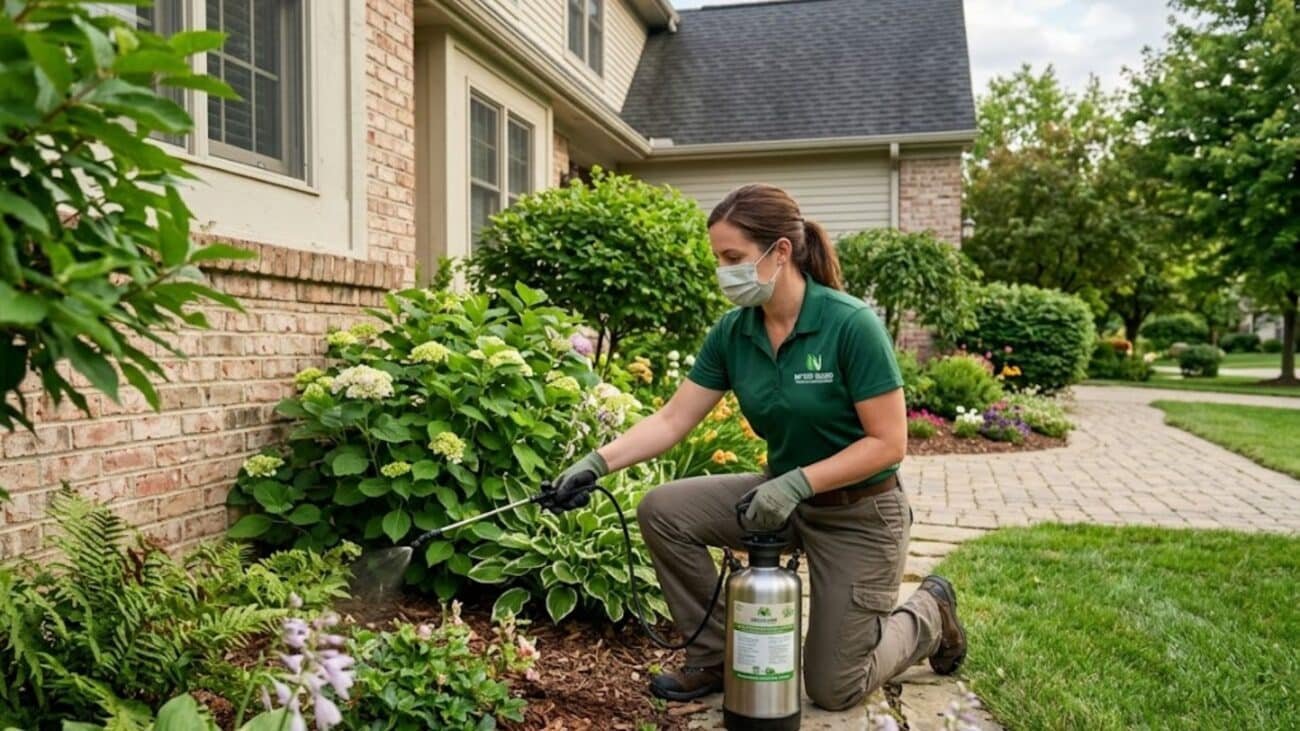
Eco-friendly pest control usually costs slightly more per visit and often less per year. Reduced-risk products and insect growth regulators carry a higher unit price than commodity sprays, and exclusion work involves labor that spraying does not. What offsets it is fewer callbacks, fewer repeat infestations, and permanent fixes that stop needing treatment at all.
There is also the cost nobody quotes. An emergency veterinary visit for pyrethroid toxicity or rodenticide ingestion can run into four figures, and structural repair after untreated termite activity runs far higher than a termite inspection. Weighed against those numbers, the premium on a low-impact program is small.
Be realistic about timeline, though. Baiting and growth regulators work over one to two pest life cycles, so a cockroach or flea problem improves in stages across two to six weeks rather than overnight. A company promising instant elimination with a green label is overselling.
Frequently Asked Questions
Is eco-friendly pest control as effective as traditional pesticides?
Yes, for most common household pests, and it is often more durable. Eco-friendly programs handle ants, spiders, cockroaches, silverfish, wasps, rodents, and many mosquito problems effectively because they target pest biology and entry routes rather than only killing what is visible. The trade-off is speed rather than results, since baits and growth regulators work across a life cycle instead of on contact. Broad spraying can also scatter insects deeper into wall voids and kill the beneficial predators that suppress pest populations naturally.
How long after pest control spraying is it safe for pets?
For routine interior applications, pets can generally return once treated surfaces are completely dry, which usually takes 1 to 2 hours. Wet product is the actual hazard, since a pet can absorb it through paws or ingest it while grooming. Once a pyrethroid application has fully dried and bonded to a surface, typically within 1 to 4 hours, contact risk drops sharply. Always follow the specific re-entry time your technician gives you, because it varies by product and by ventilation.
What pest control chemicals are most toxic to pets?
Concentrated pyrethroids such as permethrin, bifenthrin, and cypermethrin pose the highest risk to cats, and anticoagulant rodenticides pose the highest risk to both dogs and cats through direct ingestion or by eating poisoned rodents. Concentrated essential oils including tea tree, peppermint, eucalyptus, and citrus are also genuinely dangerous to cats despite being marketed as natural. If you suspect exposure, contact your veterinarian, the ASPCA Animal Poison Control Center at (888) 426-4435, or the Pet Poison Helpline at (855) 764-7661 immediately.
Is pest control safe for cats specifically?
Yes, when the products stay in inaccessible placements and the cat is kept out until surfaces are dry. Cats are more sensitive than dogs because their livers process certain compounds inefficiently, so the safest approach uses gel baits injected into voids, sealed stations, and growth regulators rather than open-surface sprays. Cat owners should never apply a dog flea product to a cat, since those concentrations reach 45 to 65 percent permethrin and cause the majority of feline poisoning cases.
How often should Long Beach homes get pest control service?
Most Long Beach homes do well on a quarterly exterior program, with bi-monthly service in higher-pressure situations such as properties near restaurants, the port, or dense multi-unit housing. The mild coastal climate keeps pests active all year, so there is no true off-season here the way there is in colder regions. Homes with completed exclusion work and good sanitation habits often step down to fewer visits over time, which is one measurable sign the program is working.
The Bottom Line for Long Beach Families
Effective, eco-friendly, pet-safe pest control Long Beach families can trust is not a compromise anymore, and California law has largely settled the question by removing the most dangerous rodent poisons from residential use entirely. What is left is the approach that always worked better: inspect thoroughly, seal the building, bait precisely where animals cannot reach, correct the moisture and food sources, and measure results instead of repeating the same spray on autopilot. That protects your dog, your cat, the hawks and owls over the LA River, and your foundation at the same time.
The practical next step for any Long Beach household is an honest inspection that tells you what is actually happening on your property, which species you have, where they are entering, and what the least aggressive fix would be. Ask about licensing, ask about re-entry times, ask where every product is going, and expect written answers. A qualified non-toxic exterminator in Long Beach should welcome all of those questions, because a family that understands the plan is a family that gets better results from it.
Prepared by the licensed team at Touchdown Pest Control, serving Long Beach and surrounding communities. Last updated July 2026. Regulatory details reflect California Food and Agricultural Code section 12978.7 as amended by AB 2552, and Department of Pesticide Regulation enforcement letter ENF 24-20. This article is general information and is not a substitute for a site-specific inspection or veterinary advice.