

How Do You Get Rid of Mosquitoes in Your Los Angeles Backyard?
If mosquitoes have taken over your backyard, the fastest way to turn it around is to go after where they’re breeding, not just the ones landing on your arm. In Los Angeles, the first place to look is water collecting on or near your property. Get rid of the water, treat the spots where adults hide, and stay on it through the warm months. That’s the whole game.
Here’s how to actually do it.
Start With Standing Water
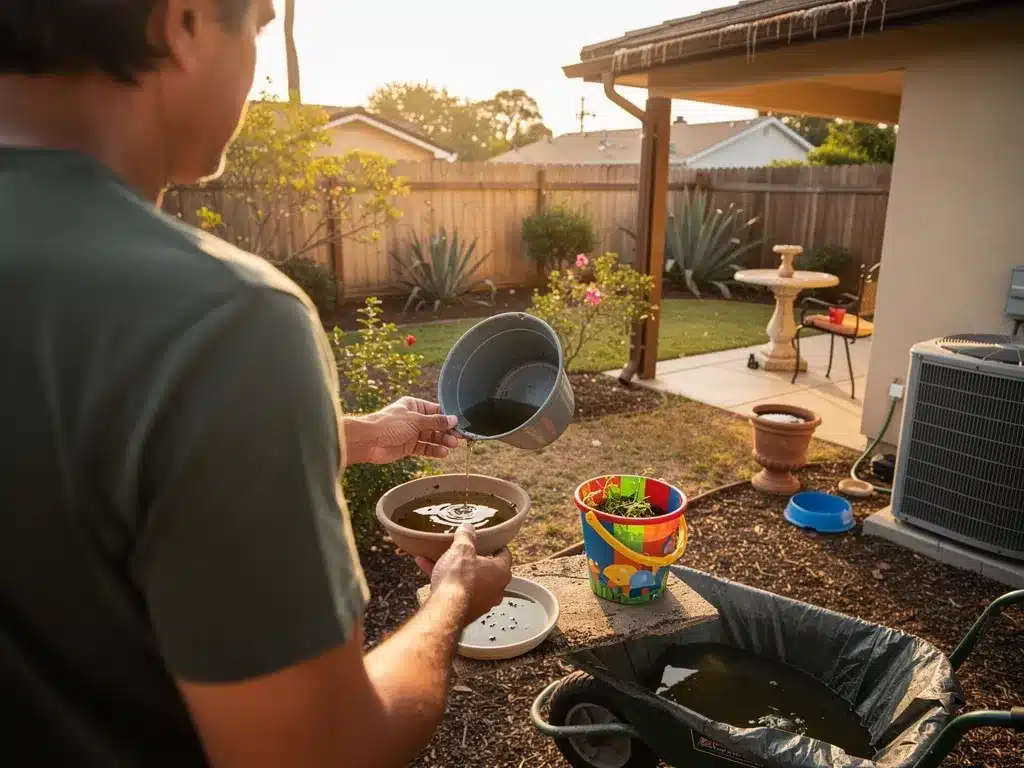
A mosquito doesn’t need much. A bottle cap of water is enough for a female to lay eggs, and in warm conditions some mosquitoes can develop from egg to biting adult in as little as 7–10 days. So standing water removal is where every real fix begins.
Walk your yard and dump anything holding water: plant saucers, buckets, kids’ toys, wheelbarrows, tarps, clogged gutters, the tray under the AC unit. At least once a week, and twice is even better, empty and scrub birdbaths, pet bowls, plant saucers, and other containers that hold water before refilling them. If you’ve got a pool that’s gone green, a fountain that’s off, or a rain barrel, those turn into mosquito factories fast, so keep them moving, covered, or emptied.
The tricky part is the water you don’t see. A low spot in the lawn that stays soggy after you irrigate, a drain that isn’t draining, a corrugated downspout with water pooled inside the ridges; these keep producing mosquitoes long after you think you’ve cleared everything out. If half your yard is wet a day after the sprinklers run, that’s a drainage and irrigation problem worth fixing, because no treatment keeps up with water that never dries.
Know Where They Hide During the Day
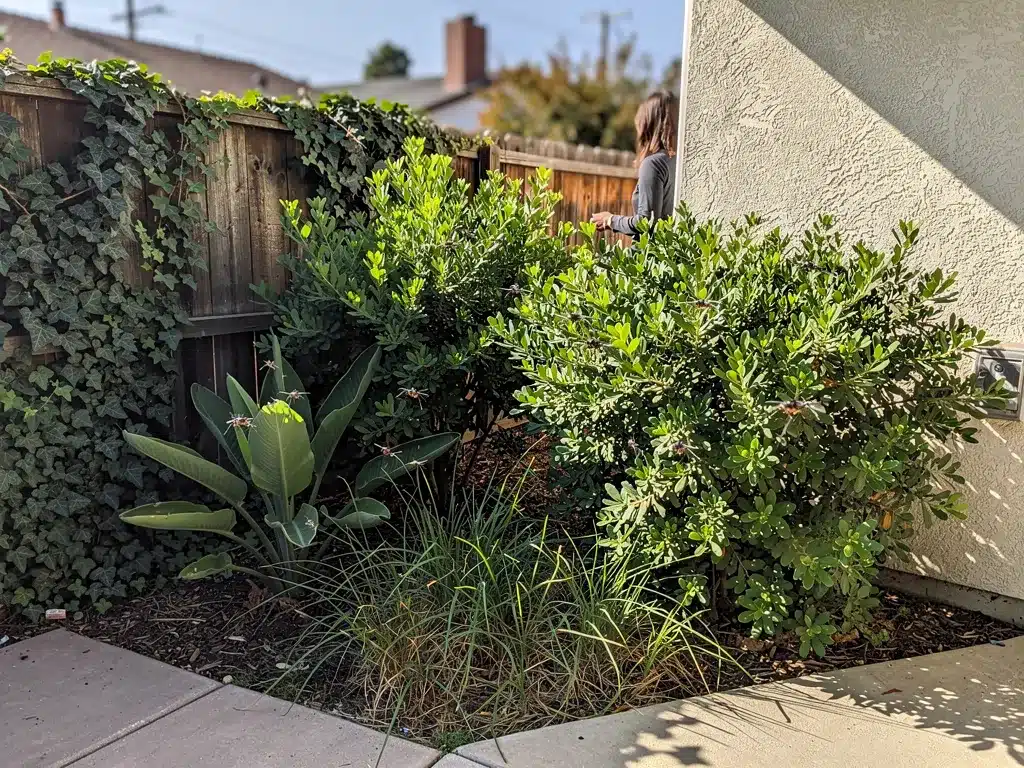
Mosquitoes don’t spend the day out in the open. Many mosquitoes rest in cool, shaded, humid areas during the hottest part of the day. Depending on the species, they may bite during daylight hours, around dawn and dusk, or after dark. If you want fewer bites, you have to think about those resting areas, not just the standing water.
Look at your dense shrubs, the ivy along a fence, the shady side of the house, tall grass, and the underside of leafy plants. That’s where adult mosquitoes wait it out. Keeping the yard trimmed, thinning out overgrown beds, and letting sun and air into those shady pockets makes your property a lot less comfortable for them.
The Two Mosquitoes Most LA Backyards Are Fighting
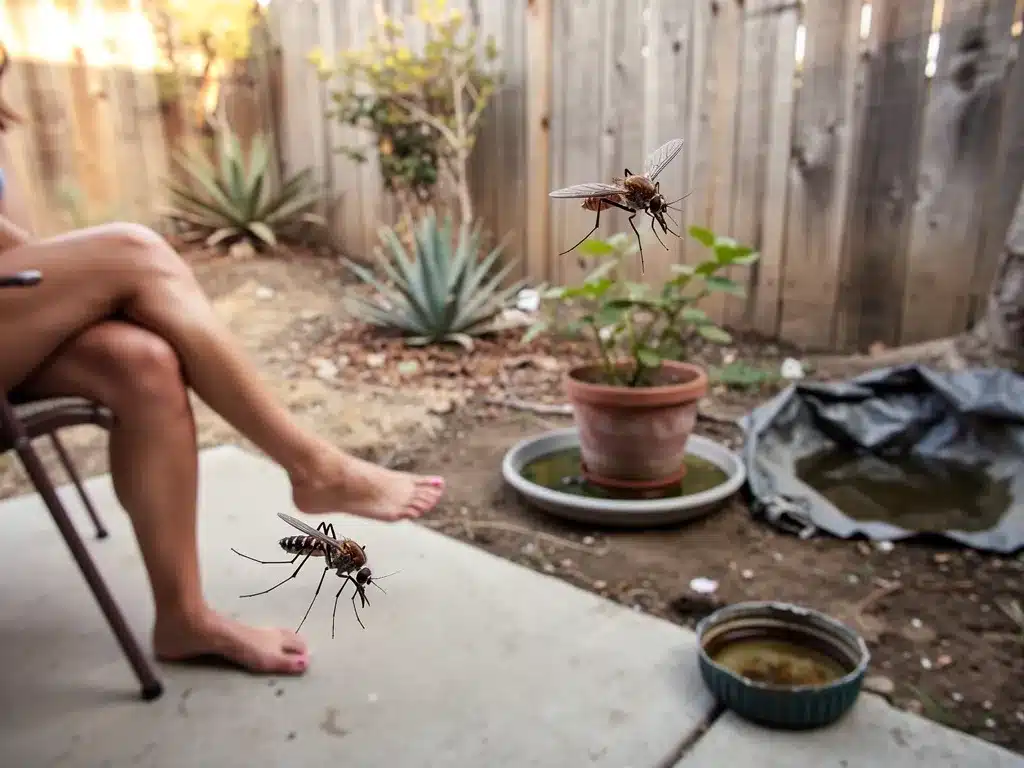
Not every mosquito behaves the same way, and in Los Angeles two of them cause most of the backyard trouble. Knowing which one you’ve got tells you when you’re getting bitten and where it’s breeding.
The first is Aedes aegypti, the invasive “ankle biter” that has spread across L.A. County in recent years. It’s small and dark with white markings, it bites aggressively during the day, and it breeds in a shocking little bit of water: a plant saucer, a bottle cap, the folds of a tarp. Because it tends to stay close to where it hatched, an Aedes problem is usually a your-yard problem, which is exactly why the standing-water cleanup above does so much of the work.
The second is Culex, the common house mosquito and the main carrier of West Nile virus in Southern California. Culex are most active from dusk into the night, and they breed in stagnant water that has had time to sit: a neglected pool, a green fountain, or water pooled in a catch basin or storm drain.
If you want to know what’s active near you, or you want to report a problem you can’t get on top of, your local mosquito and vector control district tracks both species and West Nile activity through the season.
What You Can Handle Yourself and What You Can’t
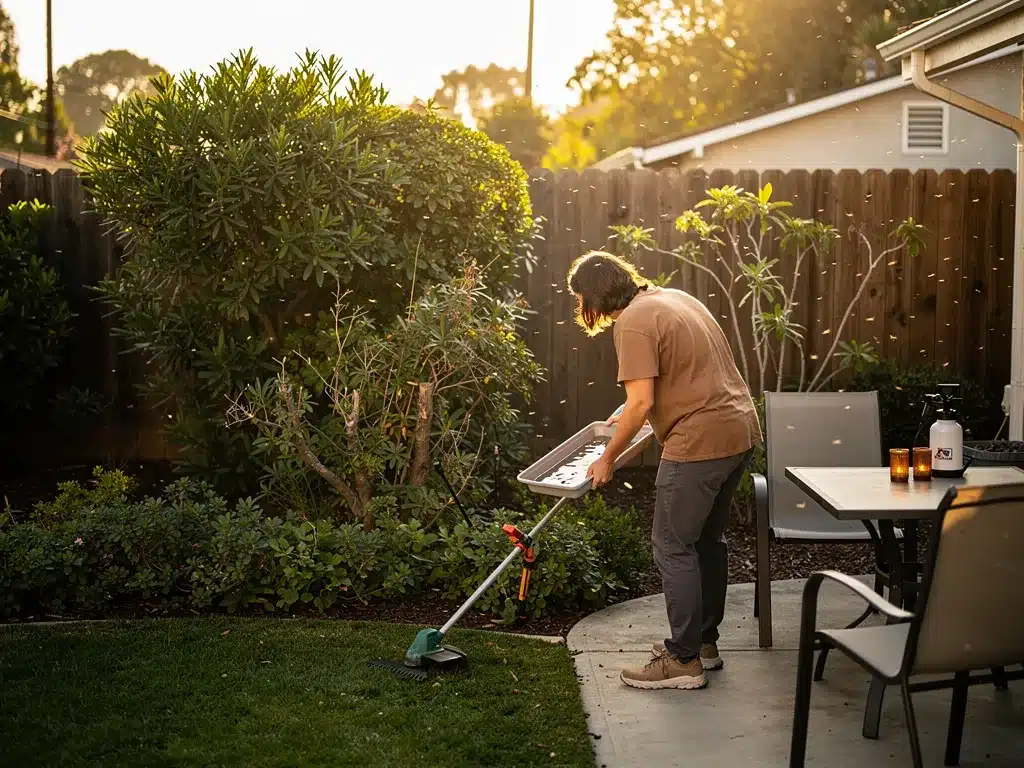
Cleaning up water and cutting back overgrowth will genuinely knock your mosquito population down, and it’s worth doing no matter what else you try. Be honest with yourself about the ceiling, though. These steps reduce mosquitoes; they don’t erase them. Mosquitoes fly in from a neighbor’s yard, a storm drain, or a greenbelt down the street, and the resting spots you can’t reach keep refilling the population.
Citronella candles, spatial repellents, and homeowner-applied sprays may provide limited or temporary relief, but they don’t correct standing water or reach every area where mosquitoes breed and rest. If you’ve done the cleanup and you’re still getting eaten alive in your own backyard, that’s usually the point where professional outdoor mosquito treatment earns its keep.
How Professional Outdoor Mosquito Treatment Works
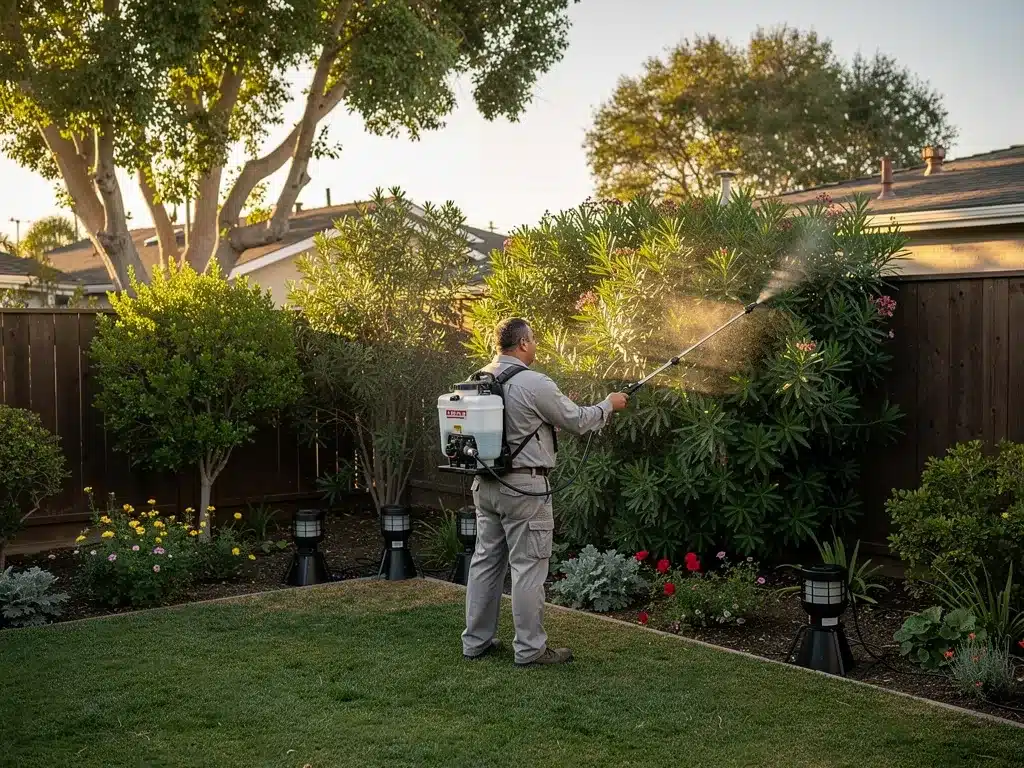
A professional treatment goes after the part you can’t: the adults hiding in the landscape and the mosquitoes that keep coming back between visits.
TouchDown Pest Control approaches mosquito control from two directions. First, we apply a targeted treatment to shrubs, foliage, and shaded areas where adult mosquitoes commonly rest. Second, we place mosquito breeding traps around the property. These traps attract female mosquitoes looking for a place to lay eggs and interrupt the breeding cycle, helping reduce the next generation of mosquitoes between service visits.
None of that makes mosquitoes disappear for good; anyone promising that isn’t being straight with you. The goal is to reduce mosquito pressure so you can use your backyard more comfortably.
Staying Ahead of It All Season
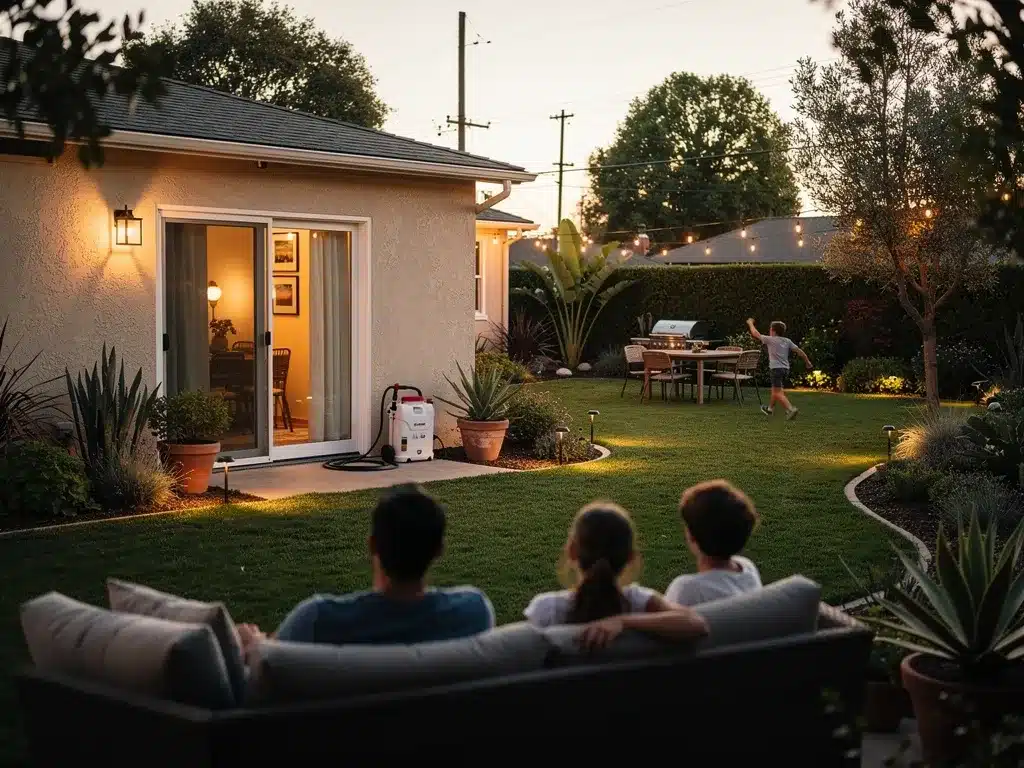
Mosquitoes can remain active for much of the year in Southern California, but pressure typically increases during the warmer months, so a one-and-done treatment in June wears off and leaves you exposed for the rest of the summer. That’s why TouchDown Pest Control runs a six-month seasonal program: steady protection across the stretch when mosquito pressure is highest, instead of a single spray you have to remember to repeat.
The seasonal program runs $160 a month for six months, which comes to $960 for the season. You get ongoing outdoor mosquito treatment through the peak months, and the recurring schedule is designed to manage new mosquito activity as conditions change throughout the season.
Get Your Backyard Back
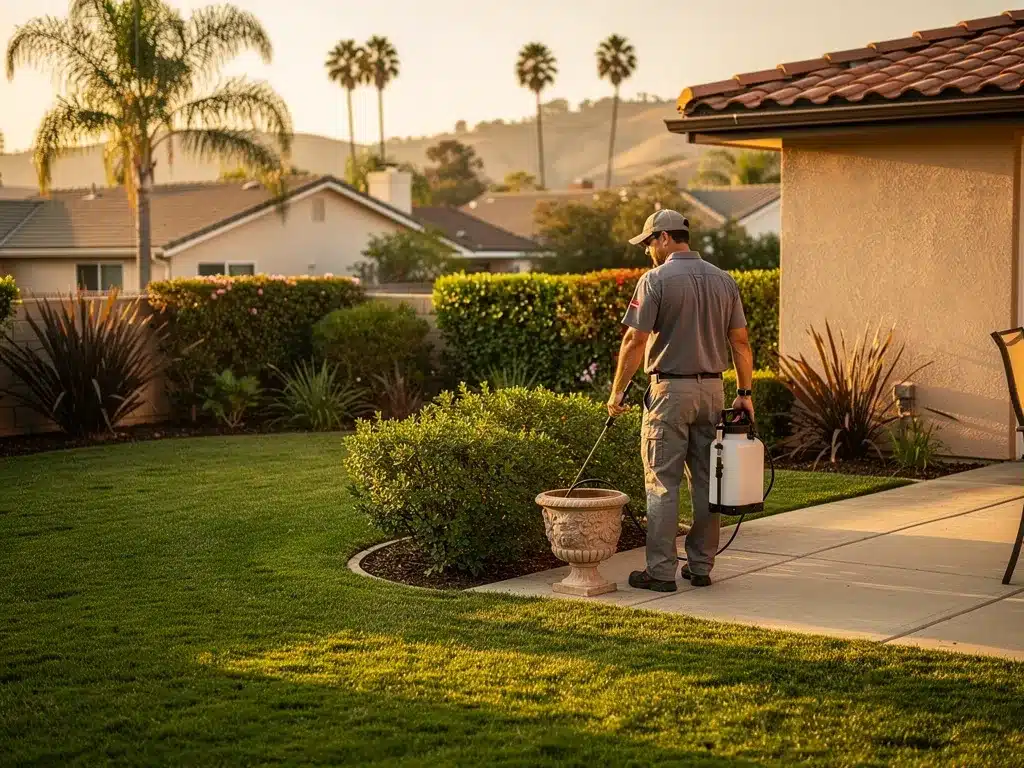
If you’ve cleared the standing water, cut back the overgrowth, and you’re still swatting every time you step outside, you’ve done your part; the rest is what a professional is for. TouchDown Pest Control is locally owned, based in West Covina, and works backyards across the San Gabriel Valley, Inland Empire, and greater Los Angeles, so the recommendations you get fit how mosquitoes actually behave here.
Call TouchDown Pest Control at (626) 966-5600 to talk through what your yard needs and whether the six-month seasonal mosquito program is the right fit for your property.