
Getting rats out of an attic takes more than trapping the rats already inside. You have to find how they are getting into the house, remove the active rodents, seal those openings, and then deal with any contamination or damage they left behind.
Skip the sealing and you can end up right back where you started.
Most attic rat calls begin with noise. You hear something moving over a bedroom late at night. Maybe it stops when you knock on the ceiling, then starts again later. Sometimes the first sign is a smell. Other times it’s damaged insulation, droppings, or wiring.
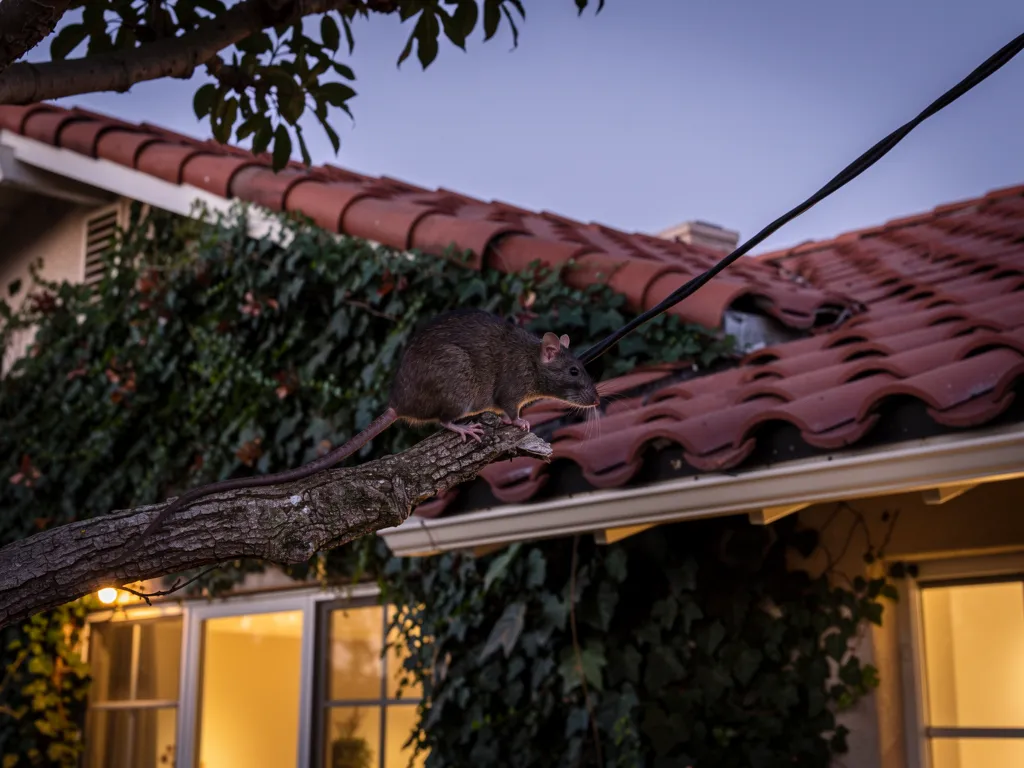
In the San Gabriel Valley, roof rats are a common cause of nighttime attic activity. They’re strong climbers, which makes the roofline and attic a natural place to look when a homeowner starts hearing movement overhead.
The important question isn’t only whether there is a rat in the attic.
How did it get there?
That’s what determines whether the problem actually gets solved.
Why Roof Rats End Up in Southern California Attics
Roof rats are built to climb.
Trees, palms, fences, vines and utility lines can all give them access to the upper part of a house. Once they’re at the roofline, they start looking for an opening.
That matters in neighborhoods throughout West Covina, Covina and the surrounding San Gabriel Valley, where mature landscaping and tile roofs are common.
A tree branch touching the roof can become a bridge. Dead palm fronds can provide shelter. Dense ivy or bougainvillea against a house can give rodents another route upward.
Then there has to be a way inside.
We commonly inspect areas around the eaves, attic vents, roof-to-wall intersections, exhaust vents and places where pipes, wiring or air-conditioning lines enter the structure.
Sometimes the opening is obvious. Sometimes it isn’t.
That’s why an attic inspection that only looks at what’s happening inside the attic doesn’t tell you the whole story.
How Do You Know If There Are Rats in the Attic?
Nighttime scratching or running above the ceiling is one of the most common signs.
You may also notice droppings, gnaw marks, disturbed insulation, nesting material or a new odor.
But sound alone doesn’t always tell you what animal is there.
Squirrels, rats and larger wildlife can all make noise above a ceiling. Their activity patterns are different, and so is the way they need to be handled.
In Southern California, roof rats are especially good climbers and are commonly associated with attics and rooflines. Norway rats tend to stay closer to the ground.
For homeowners, the bigger point is simple: confirm what you’re dealing with before deciding how to treat it.
Where Rats Get Into an Attic
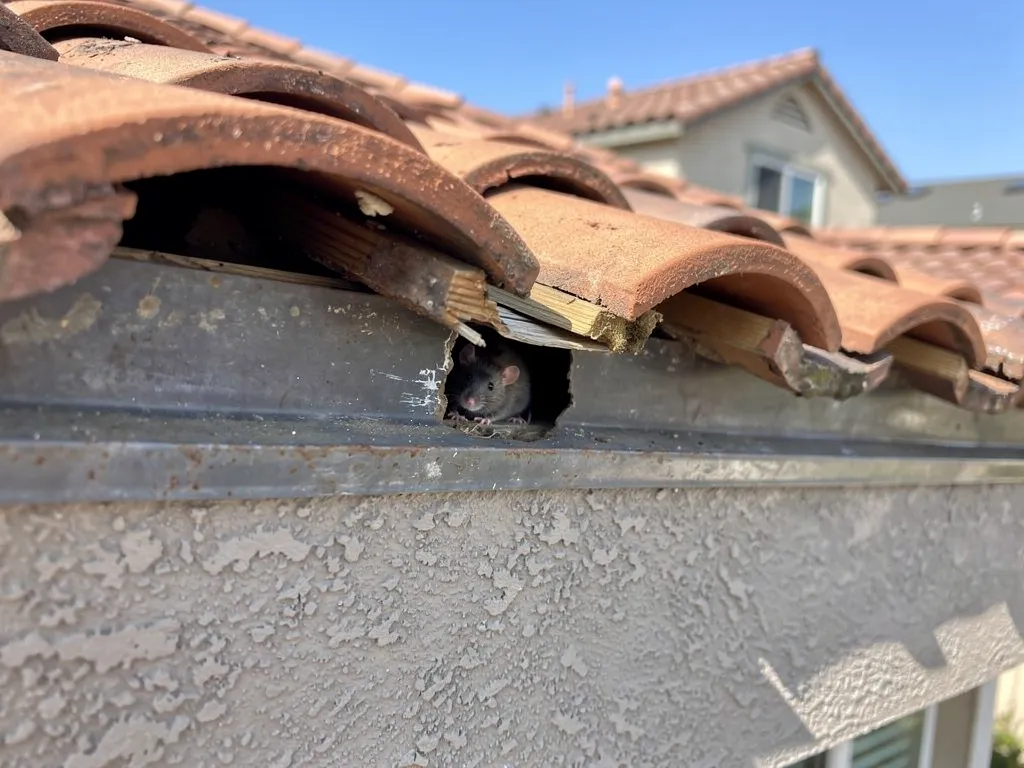
Finding the entry point is one of the most important parts of an attic rodent inspection.
The opening may be along the roofline, but the route that got the rat there can start somewhere else on the property.
Some of the areas we check include:
- Gaps along the eaves and roofline
- Damaged or unscreened attic vents
- Openings around plumbing, electrical or HVAC lines
- Roof-to-wall intersections
- Damaged fascia or other deteriorated wood
- Exhaust vents with missing or damaged covers
- Gaps around chimney or roof penetrations
We also look for evidence that tells us which openings are actually being used.
Rodents tend to follow familiar routes. Over time, that can leave droppings, gnaw marks, disturbed material or dark rub marks near an active opening.
The goal of the inspection isn’t to say, “There are rats.”
You already called because you suspected that.
The goal is to determine where they’re traveling, where they’re getting inside and what has to be closed once they’re removed.
Why Killing the Rat Isn’t Enough
This is where attic rodent problems often get mishandled.
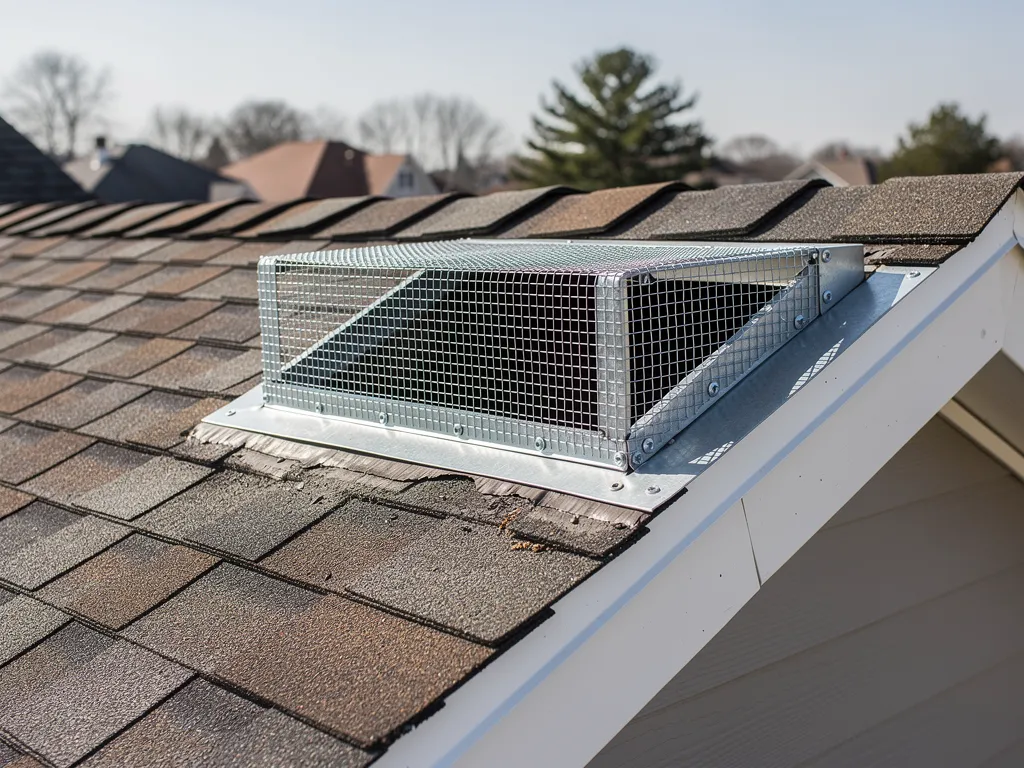
If you remove the animals but leave the opening, you haven’t fixed the reason they got inside.
Another rat can use the same route.
There’s also a reason to be cautious about placing rodenticide inside an occupied attic. A poisoned rodent can die somewhere that is difficult or impossible to reach, including inside a wall, soffit or beneath insulation. That can create an odor problem and attract insects while the carcass decomposes.
For an active attic infestation, TouchDown’s approach is built around removal plus exclusion.
The rats already inside have to come out.
The openings that allowed them inside have to be addressed.
Both parts matter.
What Does Attic Rat Removal Actually Involve?
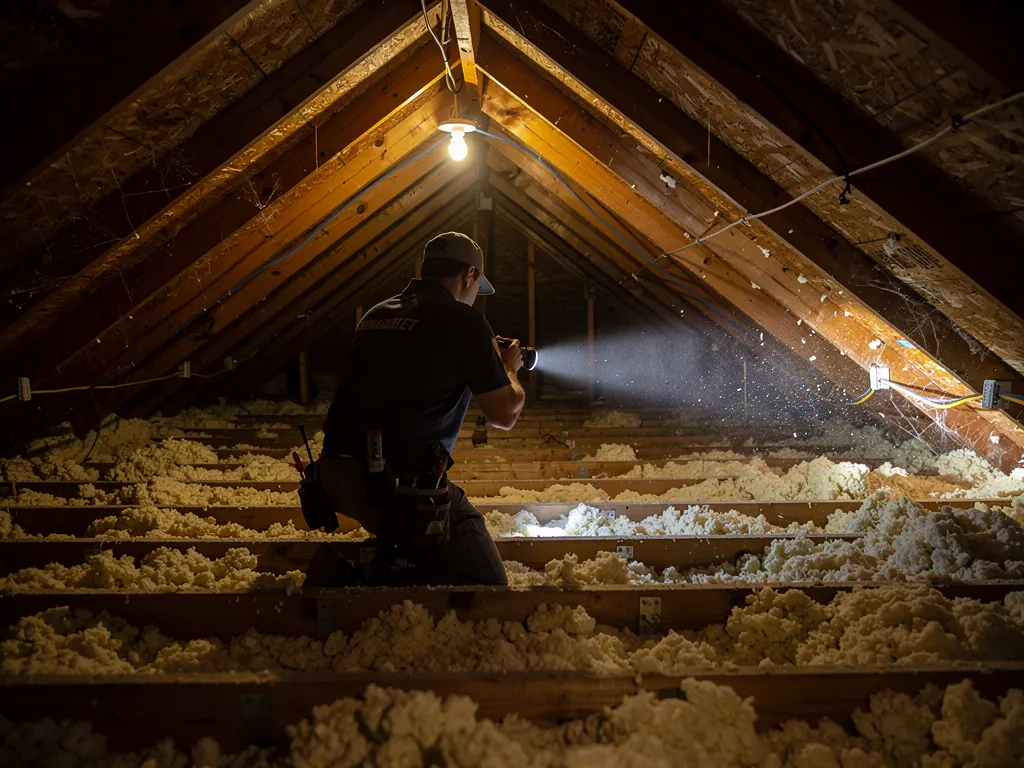
A proper attic rodent job happens in stages.
1. Inspect the Roofline and Attic
We start by figuring out how the rodents are using the property.
That means looking beyond the spot where you heard the noise.
The exterior inspection looks for possible access points along the roofline and other parts of the structure. Inside the attic, we’re looking for signs of activity, travel routes, nesting areas, contamination and visible damage.
That information gives us the scope of the problem before removal begins.
2. Remove the Rats Already Inside
Once we know where the activity is, traps can be placed along the areas the rodents are already using.
This isn’t always an overnight process.
Rats can be cautious around something new in their environment, and the amount of time needed depends on how much activity is present.
The important part is that removal can be monitored. We can see whether activity is continuing rather than assuming the problem disappeared because the attic got quiet for a night.
3. Close the Entry Points
Once the access points have been identified, they need to be properly closed with materials appropriate for rodent exclusion.
This is where the difference between rodent removal and rodent control becomes important.
Catching the rat deals with the animal that’s there today.
Exclusion deals with how it got there.
Foam or a quick patch isn’t automatically rodent proof. Different openings require different repairs depending on where they are and how the building is constructed.
4. Assess the Attic
After the active rodent problem is under control, the attic needs another look.
A small amount of surface contamination is different from an attic where rodents have been nesting for months.
Droppings and urine can contaminate insulation. Rodents can also disturb insulation, damage ductwork and gnaw on wiring.
How much cleanup or restoration is needed depends on what we actually find.
Not every attic needs all of its insulation replaced.
That’s why cleanup should follow an inspection rather than automatically being added to every rodent job.
5. Follow Up
Rodent control shouldn’t end the moment the attic gets quiet.
Follow-up helps confirm that activity has stopped and gives us another opportunity to check the areas that were sealed.
If there is still activity, we need to know why.
If there isn’t, we can move toward closing out the job.
Do You Have to Replace Attic Insulation After Rats?
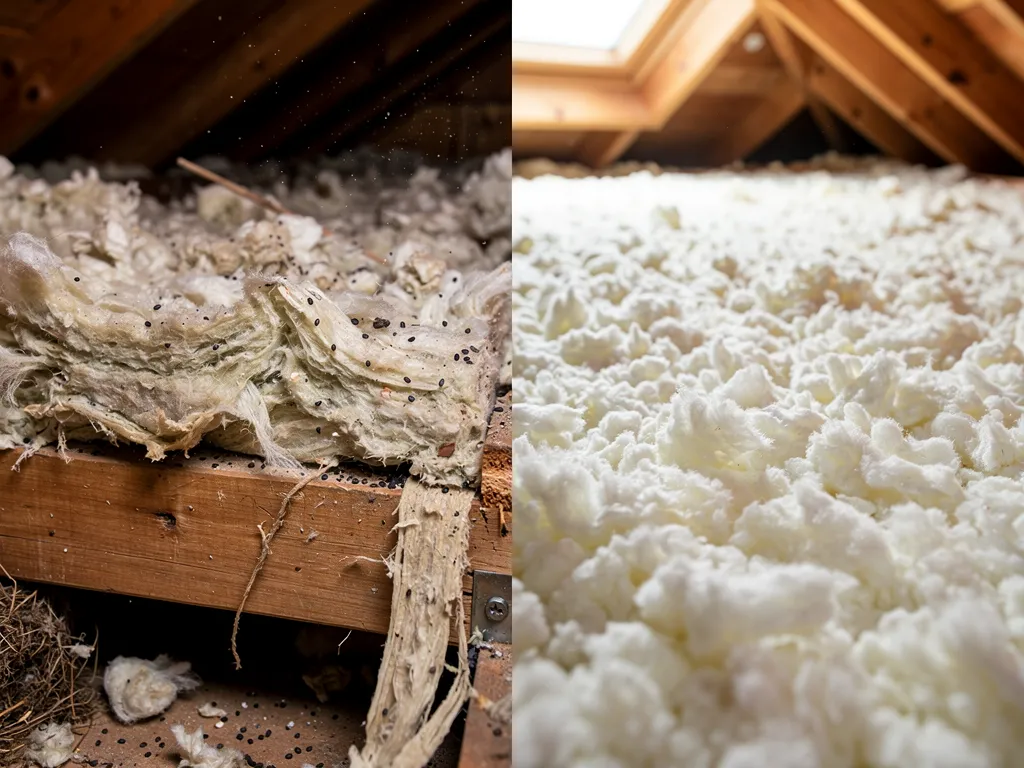
Not necessarily.
The condition of the insulation matters more than the simple fact that a rat was present.
A few droppings in a limited area are different from insulation that has been heavily contaminated, compressed or used for nesting.
That’s something we assess after the rodent activity has been addressed.
The same goes for other attic damage.
Rats gnaw. If they’ve been in the attic long enough, wiring, ductwork and other materials should be checked for visible damage.
The goal isn’t to sell an attic rebuild because someone heard a rat.
It’s to identify what actually needs attention.
How Long Does It Take to Get Rats Out of an Attic?
There isn’t one timeline that applies to every house.
A single point of entry with limited activity is different from a home with multiple openings and an established rodent population.
The condition of the roofline matters too. If an opening involves damaged roofing or another structural issue, that repair may have to be coordinated before the exclusion work can be completed.
That’s another reason we’re careful about promising an exact timeline before seeing the property.
The inspection tells us what kind of job we’re actually dealing with.
What Can You Do Around the House Right Now?
You don’t need to climb onto the roof to make the property less attractive to roof rats.
Start at ground level.
Trim tree limbs and vegetation that provide easy access toward the roof. Keep dead palm material maintained. Pick up fallen fruit, particularly around citrus and avocado trees. Don’t leave pet food outside overnight, and keep trash containers secured.
Look at the landscaping around the house too.
Dense vines growing directly against a wall can give rodents a route upward that homeowners don’t immediately notice.
These steps don’t replace trapping or exclusion when rats are already inside the attic. They reduce some of the conditions that help rodents reach and remain around the house.
What If More Than One Unit Shares the Attic?
This changes the scope of the job.
In a duplex, apartment building or other multi-unit property, rodent activity doesn’t necessarily stay above the unit where someone first heard it.
Shared walls, common attic spaces and connected rooflines can allow rodents to move through more than one part of the building.
Treating only the unit that complained may leave the larger problem untouched.
For property owners and managers, the inspection should look at the structure as a whole and document where activity and potential access points are found.
Frequently Asked Questions
How do I know if it’s rats or squirrels in my attic?
The time of day can provide a clue. Rats are generally active at night, while squirrels are more commonly active during daylight hours. Sound alone isn’t enough to confirm the animal, though. Droppings, entry points and other evidence should be considered as part of the inspection.
Can rats get into a house through the roof?
Yes. Roof rats are strong climbers and can reach a roof using trees, vines, fences and other structures. From there, they can take advantage of openings around eaves, vents and other parts of the roofline.
Can I just use poison for rats in the attic?
Rodenticide used inside an attic can create another problem if the animal dies somewhere inaccessible. An attic rodent plan should also address the openings that allowed the rats into the structure. Removing animals without dealing with entry points leaves the property vulnerable to more activity.
Do I have to replace the insulation after rats?
Not automatically. It depends on the amount and type of contamination and whether the insulation has been damaged or used for nesting. That should be assessed after the active rodent problem is under control.
Why do rats keep coming back to the attic?
Recurring activity usually means there is still a way into the structure or conditions around the property continue to make access easy. That’s why exclusion is such an important part of long-term rodent control.
What attracts roof rats around Southern California homes?
Food, shelter and access all matter. Fallen fruit, pet food, bird seed, dense vegetation and dead palm material can support rodent activity around a property. Trees and vines near the structure can also make it easier for roof rats to reach the roofline.
Hearing Rats in Your Attic?
If you’re hearing movement above the ceiling, the first step is figuring out what is up there and how it got inside.
TouchDown Pest Control provides rodent inspections throughout West Covina, Covina and the surrounding San Gabriel Valley.
We inspect the attic and the exterior of the structure so we’re looking at the entire problem, not only the noise you’re hearing inside.
**[Schedule a free inspection]**
Already know you have rodents? Learn more about **TouchDown’s rodent control services** and what happens after we find the entry points.