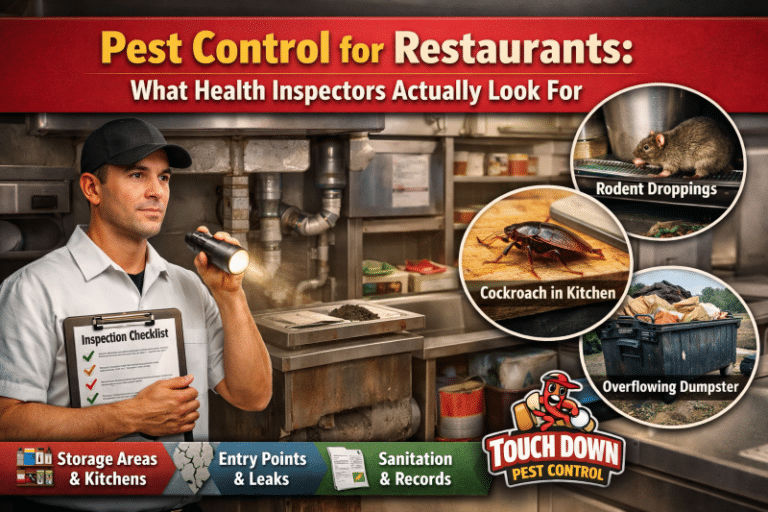
Pest Control for Restaurants: What Health Inspectors Actually Look For
Running a restaurant is a constant balancing act. Between managing staff, maintaining food quality, handling customer expectations, and staying profitable, compliance often feels like just another box to check. But when it comes to pest control for restaurants, health inspectors don’t see it as a minor detail. They see it as a direct reflection of food safety, sanitation standards, and operational discipline.
A single pest-related violation can result in failed inspections, fines, temporary closures, or devastating online reviews. Even worse, many restaurant owners don’t realize they’re already out of compliance until an inspector points it out. Understanding what inspectors actually look for gives you the power to stay ahead, protect your reputation, and keep your doors open.
Why Pest Control Is a Top Priority for Health Inspectors
Health inspectors are trained to assess risk. Pests represent one of the most serious risks in food service environments because they directly contaminate food, surfaces, and storage areas. Rodents, cockroaches, flies, and ants are not just unpleasant—they carry bacteria, pathogens, and allergens that can cause foodborne illnesses.
Inspectors are not only checking whether pests are visible at the moment of inspection. They look for evidence of past or ongoing activity, conditions that encourage infestations, and whether your restaurant has systems in place to prevent problems. This is why pest control for restaurants is evaluated as an ongoing process rather than a one-time fix.
Restaurants that treat pest control as reactive often fail inspections. Those who approach it proactively, with documented procedures and professional support, tend to pass consistently.
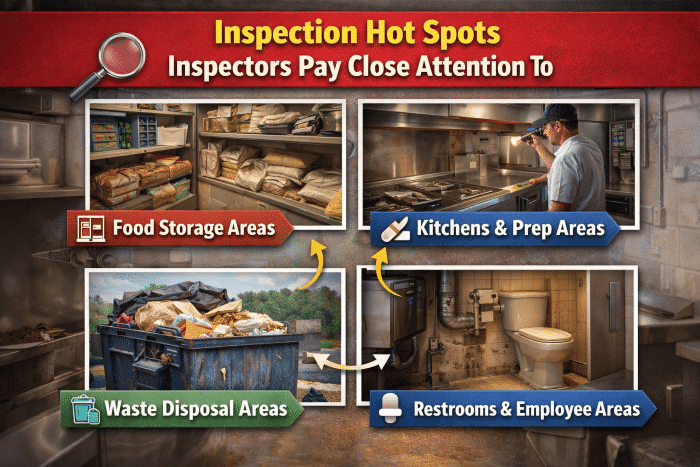
Inspection Hot Spots Inspectors Pay Close Attention To
Certain areas of a restaurant are known problem zones, and inspectors spend extra time examining them. These are the places where pests are most likely to hide, feed, or enter the building.
Food storage areas are always a primary focus. Inspectors check dry storage rooms, walk-in coolers, and freezers for droppings, gnaw marks, damaged packaging, and improperly stored ingredients. Even sealed food can be flagged if it’s stored too close to walls or directly on the floor, creating harborage opportunities.
Kitchens and prep areas are another critical zone. Inspectors look under equipment, behind appliances, and around floor drains. Grease buildup, moisture, and food debris create ideal conditions for cockroaches and flies. A clean surface at eye level means little if pests are thriving below or behind equipment.
Waste disposal areas are often where restaurants fail inspections. Dumpsters placed too close to doors, overflowing trash bins, or leaking liquids can attract rodents quickly. Inspectors also check whether trash areas are cleaned regularly and whether lids remain closed.
Finally, restrooms and employee areas matter more than many owners realize. Pests don’t limit themselves to kitchens. Evidence of activity in non-food areas still counts against your facility because pests travel freely throughout the building.
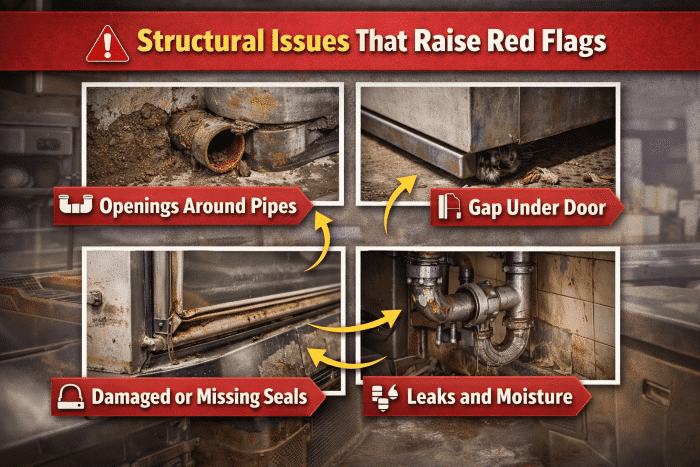
Structural Issues That Raise Red Flags
Even if no pests are visible, inspectors evaluate whether your building is pest-proofed. Small structural issues can signal a high risk of infestation.
Gaps under doors, cracked walls, broken seals around pipes, and damaged window screens are common violations. Rodents can squeeze through openings as small as a quarter, while insects need even less space. Inspectors often use flashlights to check door sweeps, utility penetrations, and exterior walls.
Moisture problems are another major concern. Leaking pipes, standing water, or condensation create perfect breeding environments for pests. Health inspectors know that where moisture exists, pests usually follow.
This is why effective pest control for restaurants goes beyond spraying chemicals. It includes exclusion, maintenance, and continuous monitoring to reduce conditions that attract pests in the first place.
Documentation Inspectors Expect to See
One of the most overlooked aspects of inspections is paperwork. Health inspectors frequently ask for pest control records, and not having them can result in violations even if no pests are found.
Inspectors typically expect to see a current service agreement with a licensed pest control provider. This shows that your restaurant has professional oversight rather than relying on sporadic DIY treatments. They also look for service reports that document inspection dates, findings, treatments performed, and recommendations.
Trend logs or monitoring records can also work in your favor. These documents demonstrate that pest activity is tracked over time and addressed promptly. If a minor issue was identified and corrected quickly, inspectors are far more forgiving.
Working with a professional provider like Touch Down Pest Control ensures your documentation is inspection-ready, organized, and compliant with local health regulations.
Common Pest-Related Violations That Lead to Failed Inspections
Many restaurant owners are surprised to learn that they fail inspections not because of active infestations, but because of preventable mistakes.
Improper food storage is a frequent violation. Open containers, torn packaging, and cluttered storage rooms make it impossible to rule out contamination. Inspectors view these conditions as invitations for pests.
Another common issue is inadequate cleaning schedules. Missed deep cleaning under equipment or around drains can lead to insect activity that inspectors quickly notice. Even a small amount of grease buildup can be enough to raise concerns.
Lack of a pest control plan is also a major problem. Inspectors want to see evidence that pest control for restaurants is systematic and ongoing, not something addressed only after a complaint or sighting.
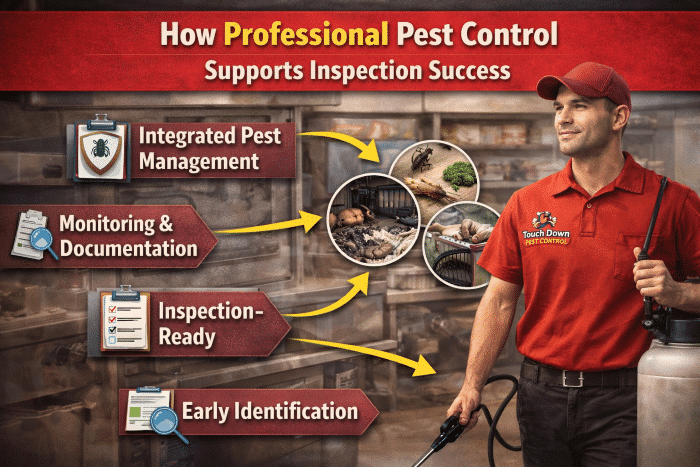
How Professional Pest Control Supports Inspection Success
Professional pest control is not just about eliminating pests—it’s about reducing risk and maintaining compliance. Experienced technicians understand inspection standards and know how to align treatment plans with health department expectations.
A company like Touch Down Pest Control focuses on integrated pest management, combining monitoring, exclusion, sanitation guidance, and targeted treatments. This approach minimizes chemical use while maximizing long-term prevention, which inspectors strongly favor.
Regular service visits allow potential issues to be identified early, often before inspectors ever see them. This proactive strategy protects your restaurant from surprise violations and costly disruptions.
Training Staff to Support Pest Prevention
Inspectors also observe employee behavior. Train your staff on pest prevention to better understand basic pest prevention practices and help reinforce compliance.
Employees should know how to store food correctly, report pest sightings immediately, and follow cleaning protocols consistently. When inspectors ask questions, confident and informed responses signal that pest control is taken seriously at every level of the operation.
Effective pest control for restaurants is a team effort, and professional providers often assist by offering guidance that managers can pass along to staff.
Long-Term Benefits Beyond Passing Inspections
While passing inspections is critical, the benefits of strong pest control extend far beyond compliance. A pest-free restaurant protects your brand reputation, improves customer confidence, and reduces the risk of foodborne illness claims.
Consistent pest management also saves money in the long run by preventing severe infestations that require expensive emergency treatments or cause temporary closures. Partnering with Touch Down Pest Control gives restaurant owners peace of mind, knowing their business is protected year-round.
People Also Ask (FAQ)
1. How often should restaurants schedule pest control services?
Most restaurants benefit from monthly service, though high-risk environments may require more frequent visits depending on activity and location.
2. Can a restaurant fail an inspection without seeing live pests?
Yes. Evidence such as droppings, nesting material, or conditions that attract pests can result in violations even if no live pests are observed.
3. Are DIY pest control products acceptable for restaurants?
Health inspectors generally prefer professional pest control services because they ensure safe application, proper documentation, and regulatory compliance.
4. What pests cause the most inspection failures?
Rodents and cockroaches are the most common causes of failed inspections due to the serious health risks they pose.
5. Why is documentation so important during inspections?
Documentation proves that pest control is proactive and ongoing. It shows inspectors that issues are monitored, addressed, and prevented systematically.