How Pest Issues Can Shut Down Your Business (And How to Prevent It)
When most business owners think about risks to their operations, they imagine economic downturns, staffing shortages, or compliance regulations. What often goes overlooked is one of the most silent and reputation-damaging threats in the commercial world: pest issues. Businesses of all sizes—from restaurants and grocery stores to warehouses, retail spaces, and healthcare facilities—face enormous consequences when pests infiltrate their environment. And while pests might seem like a nuisance at first, the truth is that pest infestations have the power to shut down a business entirely.
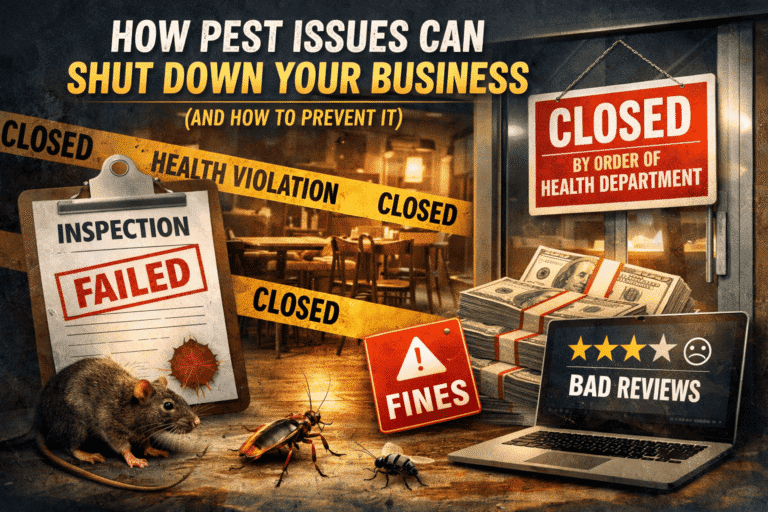
To understand why this threat should be taken seriously, it’s essential to recognize the real-world consequences. Failed inspections, health department violations, fines, legal liabilities, consumer complaints, social media call-outs, negative reviews, and even permanent closure are all common results of ignoring pest prevention. In this context, pest management is not a luxury—it’s critical risk management.
How Pest Issues Lead to Lost Reputation and Revenue
For customer-facing businesses, perception is everything. Patrons expect clean, safe, and hygienic environments. The mere sight of a cockroach crawling across the floor or a rodent darting behind a shelf can immediately create distrust, disgust, and a sense that the business is poorly managed. These reactions come with consequences.
In the age of instant reviews, a customer doesn’t even need to complain to your staff before sharing their experience with thousands of people online. The presence of pest issues can generate reactions like:
- “I’m never going back.”
- “This place is dirty.”
- “Health hazard.”
Once these statements are posted online, they stay. Negative reviews diminish credibility, lower star ratings, and deter new customers. A pest problem that starts in a single aisle, booth, or rug can turn into systemic revenue loss and long-term brand damage.
The unfortunate reality is that it doesn’t take a full-blown infestation to ruin revenue. One incident—just one—can cost a business customers, partnerships, and even licensing. In many cases, a business owner recognizes the impact only after the damage has been done.
The Legal and Regulatory Consequences of Pest Presence
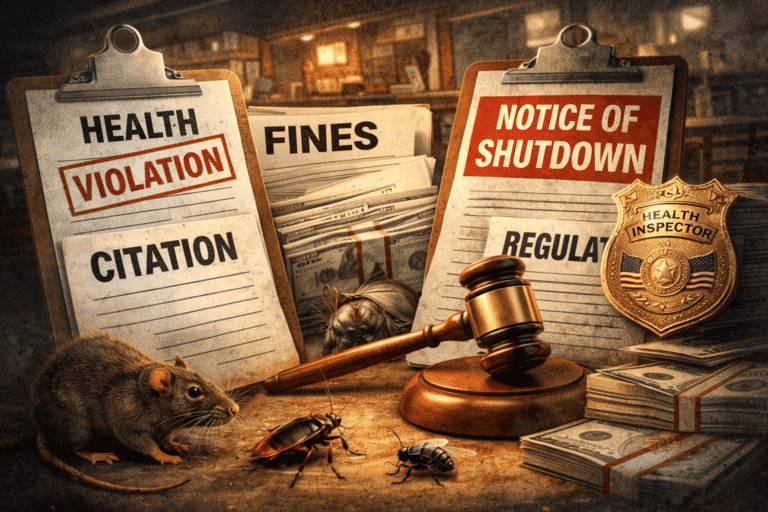
Public health agencies take pest issues extremely seriously for good reason. Rodents, cockroaches, and other pests are known carriers of bacteria, pathogens, allergens, and parasites. When these pests show up in food handling zones, medical facilities, storage and packaging environments, or anywhere involving customer interaction, government authorities are obligated to intervene.
Regulatory consequences often include:
- surprise inspections
- citations and fines
- public posting of violations
- product recalls (especially for food handling businesses)
- mandatory shutdowns until compliance is proven
Restaurants, food processors, grocery stores, and commercial kitchens are especially vulnerable. A single rodent sighting during an inspection can trigger immediate shutdown. Even businesses that never serve food directly—such as large warehouses and distribution centers—face federal regulations if pest contamination threatens the supply chain.
In highly regulated industries, pest control becomes more than cleanliness—it becomes legal compliance. Businesses increasingly realize that working with a licensed pest control company is not optional if they want to avoid legal repercussions.
Operational Shutdown: The Most Expensive Outcome
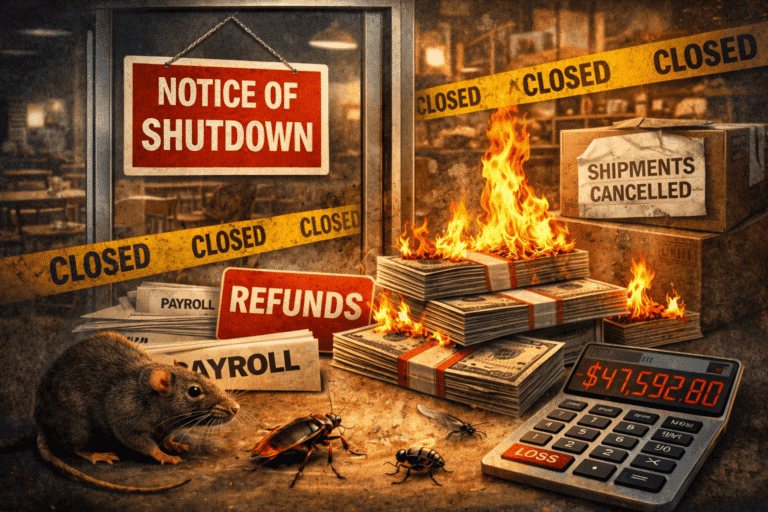
While fines and penalties are damaging, shutdowns are what truly devastate companies. Shutting down operations means:
- refunds and compensation
- labor and payroll loss
- halted production
- delayed distribution
- canceled shipments
- lost vendor trust
- expensive remediation services
And ironically, shutdowns often cost more than ongoing preventative pest control would have cost in the first place.
Manufacturers and distributors are particularly at risk. Rodent contamination in a facility that handles food, pharmaceuticals, supplements, or consumables triggers immediate product disposal and federal reporting. One case of contamination can result in tens of thousands—or millions—of dollars in destroyed product.
Consumers rarely know the extent of these disruptions because businesses are incentivized to keep the damage quiet. But within industrial sectors, shutdowns caused by pest issues are a well-known threat.
Why Prevention is Cheaper Than Remediation
When pests become visible, it means the infestation is already advanced. Most pests remain hidden in walls, crawlspaces, rafters, and storage zones long before they appear in front of customers. That’s why prevention is the smartest and most cost-efficient strategy.
Proactive pest management includes:
- routine inspections
- habitat elimination
- sanitation strategy
- exclusion methods
- environmental modifications
These approaches stop infestations before they reach detectable levels. Businesses that invest in preventative pest control do so not because they have pests, but because they know they can’t afford to have pests.
This is where professional providers like Touch Down Pest Control give businesses an edge. Rather than reacting to emergencies, they integrate scheduled inspections and treatments to keep risk low year-round. When pest management becomes part of operational risk planning, the likelihood of shutdown dramatically decreases.
Pest Control as Risk Management, Not a “Nice to Have”
In industries where compliance is regulated, pest control is already viewed as mission-critical. But in other sectors, business owners often underestimate the threat until something goes wrong. Whether a facility handles food, medical supplies, retail goods, or warehousing, pests threaten all three core business pillars:
Sanitation – contamination of products, equipment, and surfaces
Safety – disease transmission, allergic reactions, and structural damage
Brand Trust – consumer perception, online reputation, and compliance ratings
Once a business owner reframes pest control as risk mitigation rather than optional maintenance, the economics become clear. A modest recurring investment in pest prevention saves exponentially more in avoided shutdowns, penalties, and lost revenue.
This is exactly why companies partner with professional providers like Touch Down Pest Control—to transfer the risk to specialists who understand compliance, inspection demands, and environmental vulnerabilities.
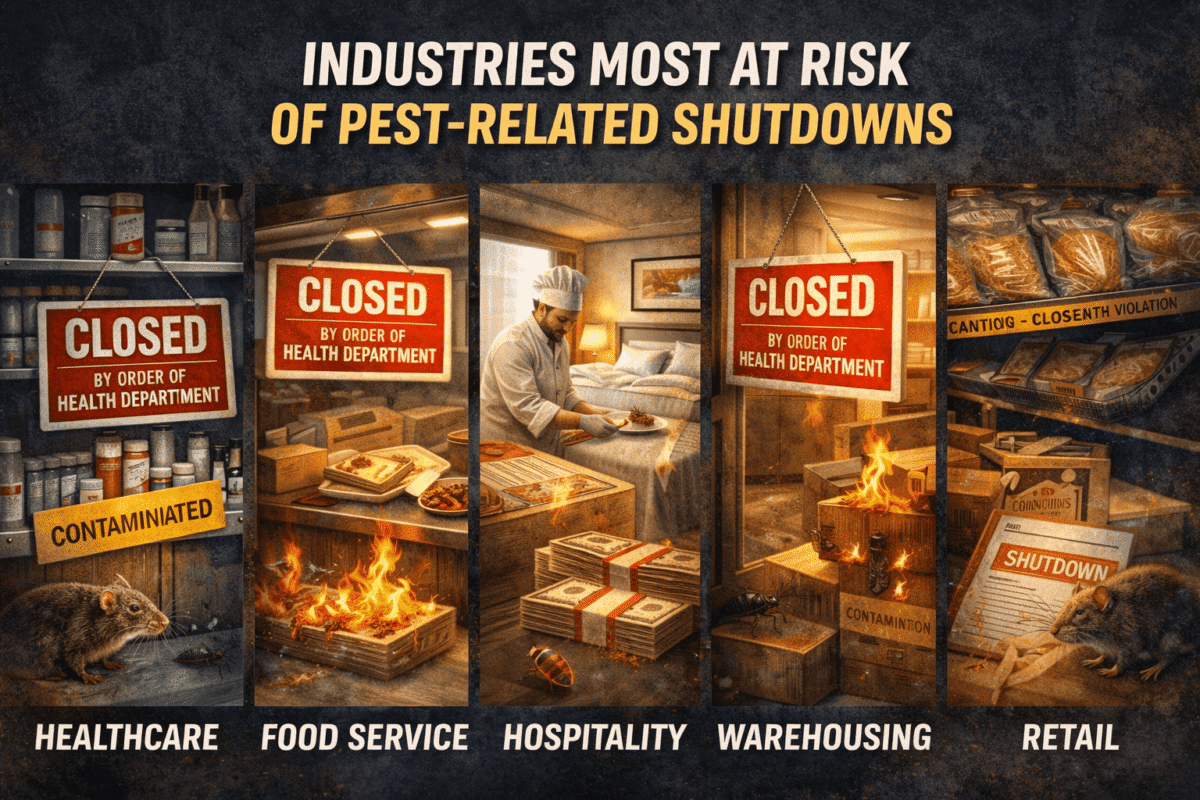
Industries Most at Risk of Pest-Related Shutdowns
While every business can suffer from pest issues, certain industries are disproportionately impacted due to inspection frequency, contamination risk, and customer expectations:
Food Service & Restaurants
The most obvious category. Health inspections are routine and highly punitive. One rodent sighting can result in immediate closure.
Food Production & Packaging
FDA and USDA compliance make pests a catastrophic liability. Entire production batches may be destroyed if contamination is confirmed.
Hospitality & Hospitality Adjacent
Hotels, event venues, and resorts depend on cleanliness and guest comfort. Bedbugs, roaches, or rodents mean lawsuits and negative reviews.
Healthcare Facilities
Pharmacies, clinics, nursing homes, and hospitals must meet strict sanitation standards. Pests can trigger regulatory violations swiftly.
Warehousing & Logistics
Pests in storage facilities can destroy packaging, contaminate goods, compromise supply chains, and trigger expensive recalls.
Retail Environments
Grocery and big-box stores face both customer perception issues and regulatory scrutiny around consumables.
Businesses in these sectors often build pest prevention into their operational strategy. Others learn the hard way that reactive measures are costly and reputation-damaging.
How Businesses Can Avoid Becoming a Shutdown Story
The good news is that shutdowns due to pests are preventable. It starts with acknowledging that self-treatment methods, over-the-counter sprays, or occasional reactionary efforts are not sufficient for commercial environments.
Professional pest prevention programs follow a structured plan involving:
- proper facility assessments
- pest identification
- sanitation guidance
- exclusion and sealing
- environmental traps and monitors
- scheduled treatments
This isn’t DIY pest control—it’s compliance control. And it’s one of the reasons businesses partner with experienced providers such as Touch Down Pest Control, who understand both the biology of pests and the regulatory consequences businesses face.
The Final Takeaway: Don’t Wait for a Shutdown Notice
Ignoring pests is not just about dealing with insects or rodents—it’s about protecting your livelihood. When shutdowns happen, they don’t just hurt profits. They end careers, dissolve partnerships, and permanently dismantle brand trust.
Businesses that incorporate professional pest control into their operations don’t do it because they’re paranoid. They do it because they’re responsible. They know that preventing pest issues is cheaper, easier, and far less risky than dealing with the aftermath of fines, inspections, complaints, legal claims, or closures.
If your business needs a proactive pest management partner that understands compliance, prevention, and commercial risk, Touch Down Pest Control is built for that purpose.
People Also Ask (FAQ)
1. Can pests really shut down a business?
Yes. Many companies experience partial or full shutdowns due to sanitation violations, failed inspections, contamination, or customer complaints linked to pests.
2. What industries are most affected?
Food service, healthcare, warehousing, hospitality, retail, and food packaging are among the most regulated and high-risk for pest-related closures.
3. Isn’t pest control only necessary if I already see pests?
No. By the time pests are visible, the infestation is often advanced. Preventative measures save money and reduce compliance risks.
4. How often should a commercial property be inspected?
Most businesses benefit from monthly or quarterly inspections, depending on industry and risk level.
5. Is preventative pest control expensive?
Not compared to closures, fines, legal liabilities, recalls, or lost customer trust. Prevention is always cheaper than reaction.