

What Are Ankle-Biter Mosquitoes and Why Are They Invading Los Angeles?
If you’re getting bitten around your ankles in the middle of the day, you may be dealing with invasive Aedes mosquitoes, commonly called “ankle biters.” One of the most widespread species in Southern California is Aedes aegypti, and it behaves nothing like the mosquitoes the area grew up with.
Here’s what they are, why they showed up, and what actually works against them.
What an Ankle-Biter Mosquito Actually Is
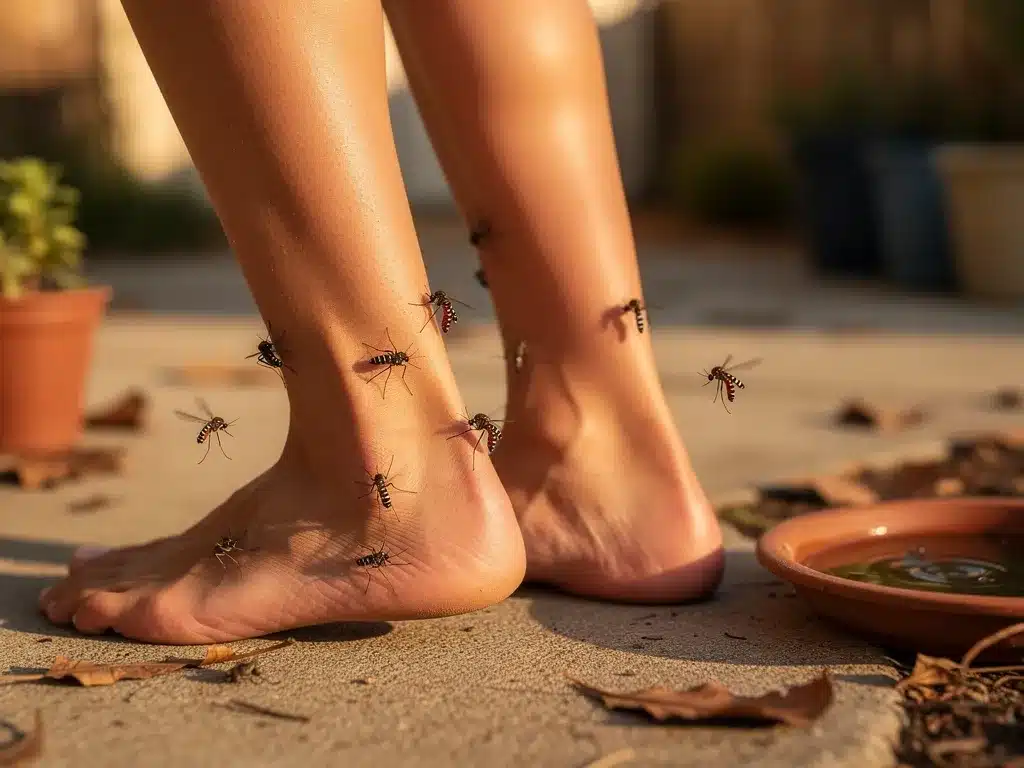
“Ankle biter” is the nickname Southern California uses for invasive Aedes mosquitoes, which includes Aedes aegypti and its close relative Aedes albopictus. They’re small and dark with bright white markings on the legs and body, and once you know to look, those stripes are the tell. They earned the nickname honestly: they come in low and fast and go for your feet, ankles, and legs.
What makes them a problem isn’t just that they bite. It’s that they bite differently, breed differently, and live closer to you than the mosquitoes the area is used to.
Why They Bite in Broad Daylight
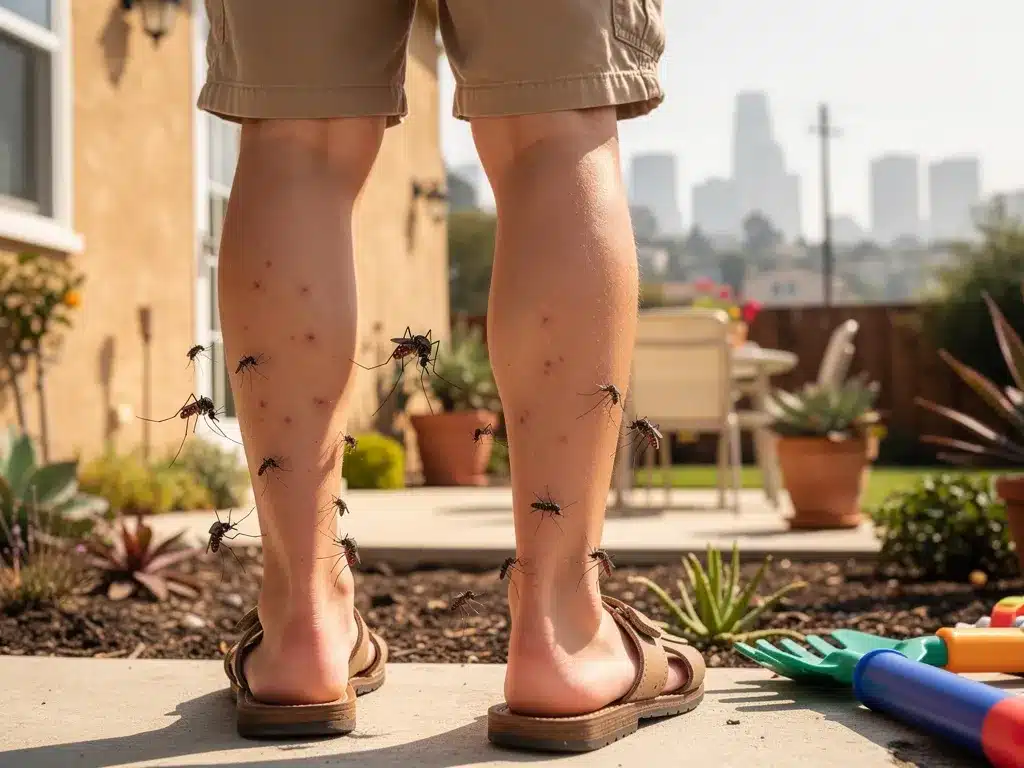
The mosquitoes Los Angeles dealt with for years were mostly a dawn-and-dusk problem. Invasive Aedes flipped that. These are daytime biting mosquitoes, most active in the morning and late afternoon, though they’ll bite whenever they get the chance.
They’re also persistent. Ankle biters can bite repeatedly, and their daytime activity can make several bites appear in a short period, often while you’re gardening, watching the kids, or just standing on your own patio. So if your yard feels unusable during the day when it never used to, this is usually why.
Why They’re Invading, and Why They Stay in Your Yard
Invasive Aedes mosquitoes began establishing themselves in the Los Angeles area in 2011, when Aedes albopictus was identified in El Monte. Aedes aegypti was first detected elsewhere in California in 2013 and was later identified in Los Angeles County. They spread the way most invasive species do, hitching rides through global trade and travel, then finding a climate that suits them. Southern California’s warm, dry weather and our habit of keeping water around (potted plants, fountains, drainage, irrigation) turned out to be a comfortable fit.
The part that surprises people is how local they are. Aedes aegypti generally stay close to where they hatch, which means the source may be on your property or a nearby property. They also breed in a shocking little bit of water: a bottle cap’s worth in a plant saucer, a forgotten bucket, the folds of a tarp, the tray under a potted plant. An ankle-biter problem may be coming from a small water source on your property or somewhere nearby, often just a few steps from where you’re getting bitten.
Why They’re More Than Just Itchy

Most ankle-biter bites are exactly what they feel like: itchy, annoying welts that can swell up more than you’d expect. But these mosquitoes get more attention from public health officials than the average backyard pest, and it’s worth understanding why.
Aedes aegypti can transmit dengue, Zika, chikungunya, and yellow fever when a mosquito becomes infected with the relevant virus. Their presence does not mean those diseases are circulating in every neighborhood. Still, it’s no longer only a travel-related concern: in 2024, Los Angeles County reported multiple locally acquired dengue infections, meaning the individuals had no travel history associated with their infections, and additional locally acquired infections were reported in 2025. The local public-health risk remains low, but it’s a real reason to control these mosquitoes rather than just live with them.
What Actually Works Against Ankle-Biters
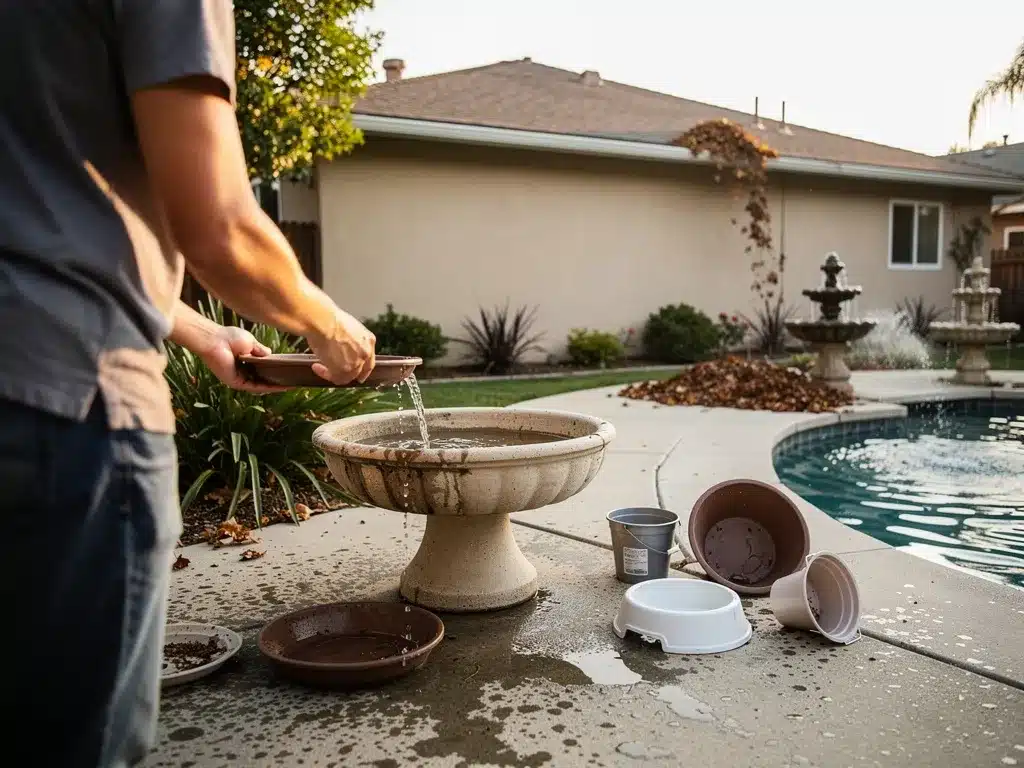
Because invasive Aedes breed so close to home in such small amounts of water, the single most effective thing you can do is take away the water. At least once a week, and twice is even better, empty and scrub birdbaths, pet bowls, plant saucers, buckets, and anything else that holds water, since eggs can cling to the sides of a container and survive a simple dump. Clear your gutters, fix the low spots and drainage issues that stay wet after you irrigate, and keep fountains and pools moving or covered. When you’re outdoors, use an EPA-registered mosquito repellent according to the label, especially if ankle biters are already active around the property.
That cleanup does real work, but be honest about the ceiling: it reduces ankle biters, it doesn’t erase them. They breed in places you can’t always find, and new ones can move in from nearby. When they’ve dug in, that’s where professional treatment comes in. TouchDown Pest Control approaches it from two directions: a targeted treatment on the shrubs, foliage, and shaded areas where adult mosquitoes rest, plus mosquito breeding traps placed around the property that attract egg-laying females and interrupt the breeding cycle, helping reduce the next generation between visits. The goal is to reduce mosquito pressure so you can use your yard more comfortably.
Your local mosquito and vector-control district may also help identify mosquito sources and address community-level concerns. TouchDown Pest Control provides property-specific treatment and recurring seasonal management for homeowners who want additional service around their yards.
Get Ahead of the Ankle-Biters
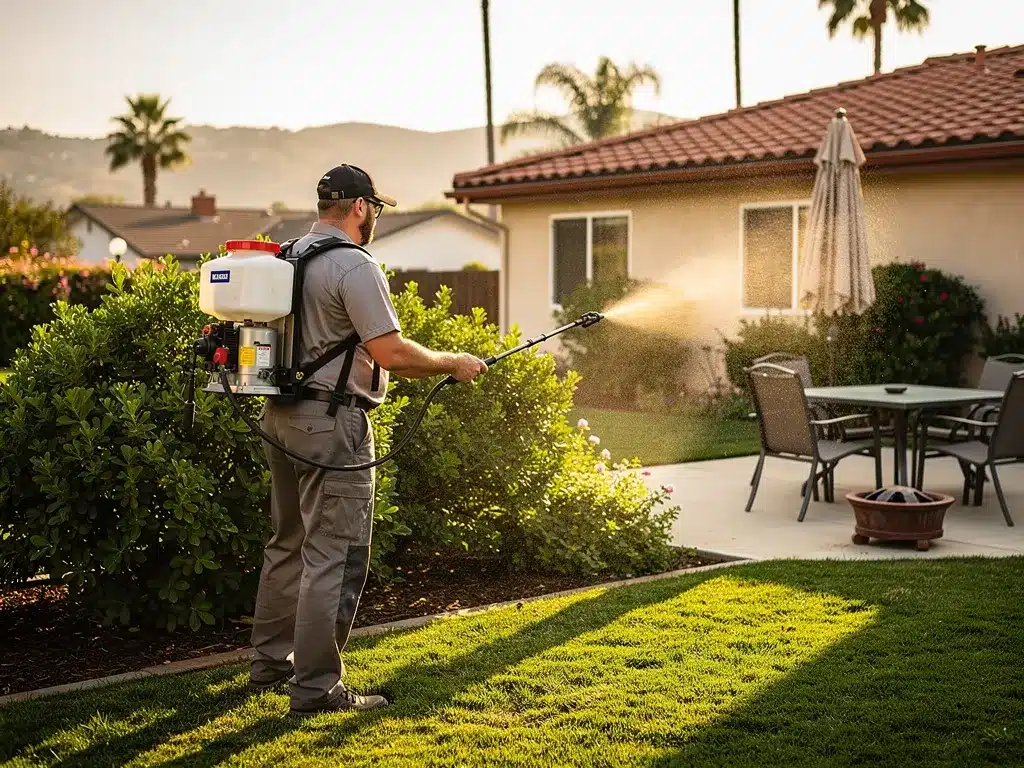
Southern California’s ankle-biter problem isn’t going away, and because these mosquitoes stay active across the warm months, staying ahead of them beats chasing them. TouchDown Pest Control offers a six-month seasonal mosquito program designed to manage changing mosquito activity through the warmer months. The program costs $160 per month for six months, for a total seasonal cost of $960.
TouchDown Pest Control is locally owned and based in West Covina, working yards across the San Gabriel Valley, Inland Empire, and greater Los Angeles. Call (626) 966-5600 to talk through what your property needs and whether the six-month seasonal mosquito program is the right fit.
Frequently Asked Questions
How do I know if I have ankle-biter mosquitoes?Daytime bites around the ankles may indicate invasive Aedes mosquitoes. These mosquitoes are small and dark with noticeable white markings, but proper identification is the best way to determine which species is present. Many of the area’s more familiar mosquito species are most active around dusk or after dark, so daytime ankle bites are a common clue.
Are ankle-biter mosquitoes dangerous?Most bites are just itchy welts. Aedes aegypti can carry viruses like dengue, Zika, and chikungunya when a mosquito becomes infected, and Los Angeles County reported locally acquired dengue cases in 2024 and again in 2025. Their presence doesn’t mean those viruses are circulating in every neighborhood, and the risk to any one person remains low, but it’s a real reason to control these mosquitoes rather than just live with them.
Why do ankle-biter mosquitoes bite during the day?It’s simply how invasive Aedes behave. Aedes aegypti is most active in the morning and late afternoon and will bite in full daylight, which is what makes it feel so different from the dusk-and-after-dark mosquitoes the area used to have.
How do I get rid of ankle-biter mosquitoes in my yard?Start by removing standing water, since they breed in tiny amounts close to home: empty and scrub containers weekly, clear gutters, and fix wet, poorly drained spots. Using an EPA-registered repellent helps protect you in the meantime. If they persist, professional treatment that combines a targeted spray with mosquito breeding traps can help reduce the population between visits.